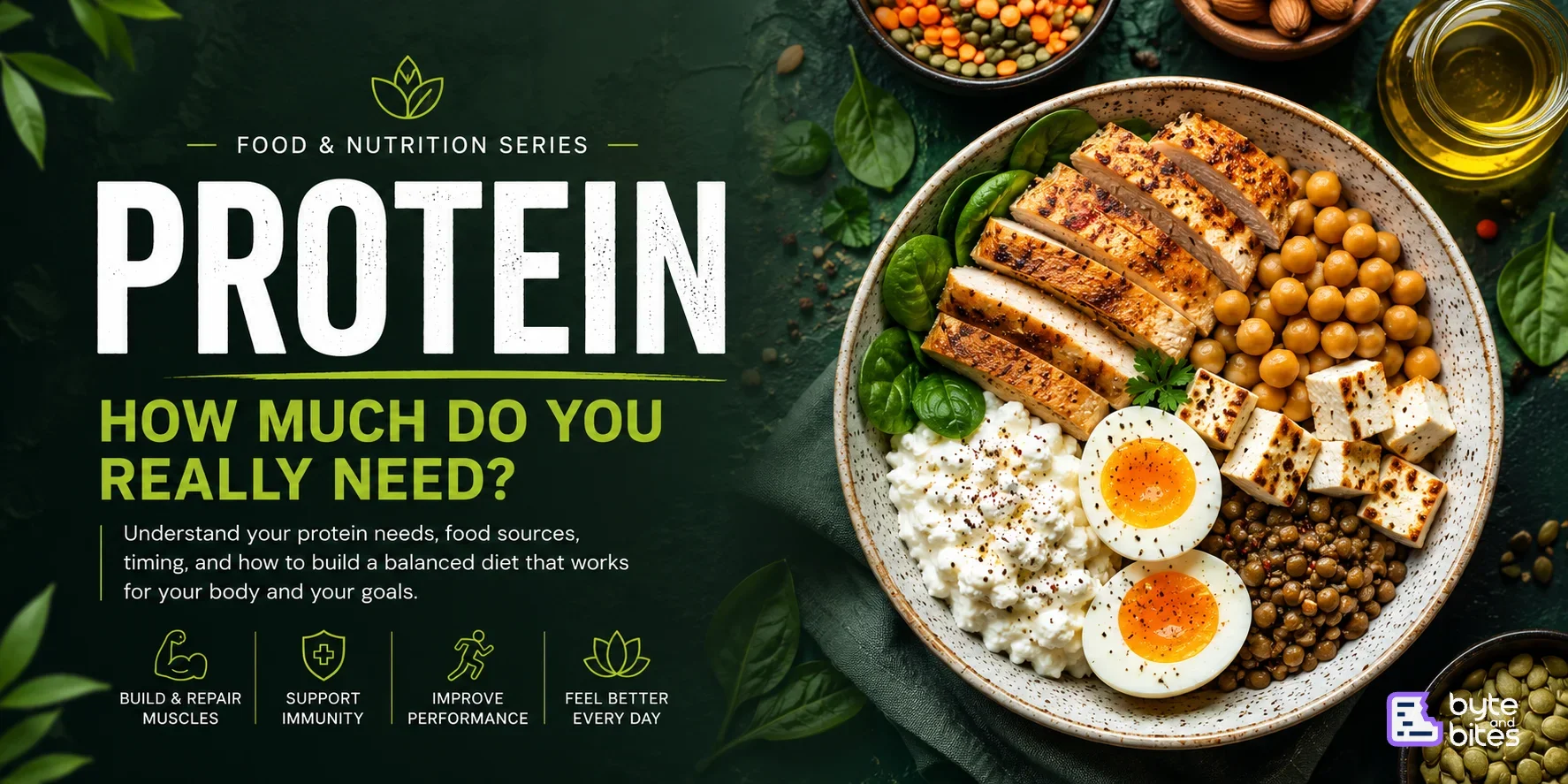
Protein is probably the most talked about nutrient in the fitness and nutrition world today. Walk into a supermarket and you will find protein bars, protein cereals, protein shakes, protein cookies, and even protein coffee.
But with all this attention, one simple question often gets lost:
How much protein do you actually need?
The answer is different for everyone. Your ideal protein intake depends on your body weight, age, activity level, fitness goals, and overall health.
And despite what social media might suggest, you do not necessarily need a huge amount of protein to be healthy.
Why Is Protein Important?
Protein is one of the three main macronutrients, along with carbohydrates and fats.
Your body breaks protein down into smaller building blocks called amino acids. These amino acids are used to build and repair muscles, skin, bones, and other tissues. Protein is also involved in making enzymes, hormones, and components of the immune system.
There are nine essential amino acids that your body cannot produce on its own, so you need to get them from food. Harvard Nutrition Source
This is why protein is important even if you have no interest in going to the gym.
You need protein to maintain the body you already have, not just to build more muscle.

So, How Much Protein Do You Actually Need?
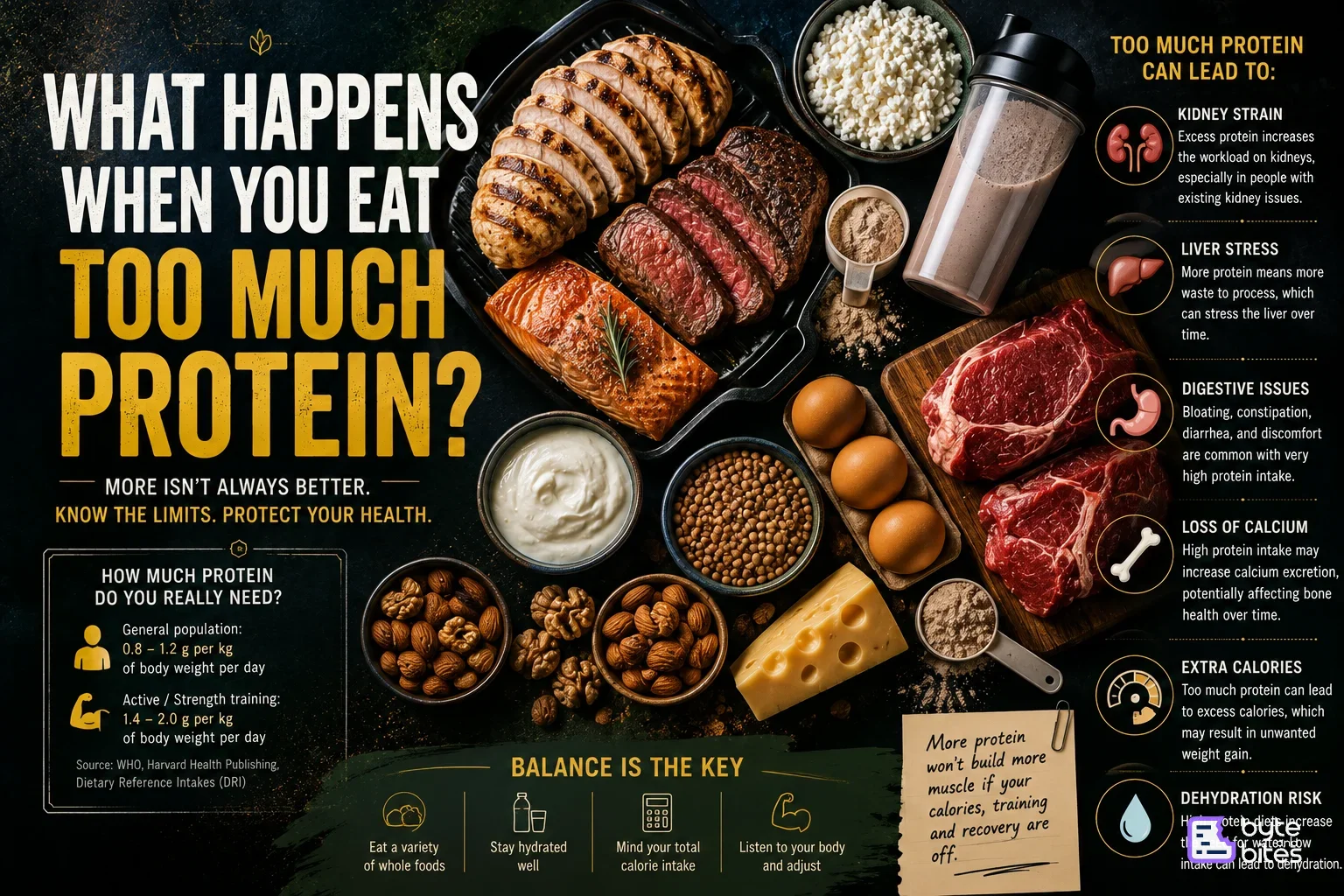
For a generally healthy adult, the commonly used Recommended Dietary Allowance is around:
0.8 grams of protein per kilogram of body weight per day.
For example:
| Body Weight | Basic Protein Requirement |
|---|---|
| 50 kg | 40g |
| 60 kg | 48g |
| 70 kg | 56g |
| 80 kg | 64g |
| 90 kg | 72 g |
So, if you weigh 70 kg, around 56 grams of protein per day is the basic recommendation for meeting your nutritional needs.
But there is an important detail here.
0.8 g/kg is a baseline, not a universal target.
Someone who spends most of the day sitting at a desk will have different needs from someone who runs regularly, lifts weights, or is recovering from an illness.
Your age, activity level, and health all influence how much protein makes sense for you. Harvard Nutrition Source
What If You Exercise?
If you exercise regularly, especially if you do strength training, your protein needs can be higher.
The International Society of Sports Nutrition suggests approximately 1.4 to 2.0 g/kg of body weight per day for people who train regularly. ISSN Position Stand
For a 70 kg person, that works out to roughly:
98 to 140 grams of protein per day.
That does not mean you need to immediately start eating 140 grams every day.
Research suggests that for many people doing resistance training, the benefits to muscle growth tend to level off around 1.6 g/kg/day. A large meta-analysis found that consuming more than this did not provide additional benefits for increasing lean body mass in the studied population. PubMed
So for someone weighing 70 kg and regularly strength training, around 110 grams per day could be a reasonable starting point.
The exact number will still depend on the person and their goals.
Does Your Goal Change Your Protein Needs?
Yes.
If your goal is simply to maintain your health, you may not need as much protein as someone trying to build muscle.
If you are trying to build muscle, training regularly, or losing weight while trying to preserve muscle mass, a higher protein intake can be useful.
A simple way to think about it is:
- Generally healthy adult: around 0.8 g/kg
- Regularly active: around 1.2 to 1.6 g/kg
- Strength training: around 1.4 to 2.0 g/kg
These are general ranges, not strict rules.
For example, two people who weigh 70 kg could have completely different protein needs depending on how active they are and what they are trying to achieve.
Where Should Your Protein Come From?
This is where protein gets a little more interesting.
Protein is not just about the number of grams. The food that provides those grams matters too.
For example, 30 grams of protein from fish comes with a very different nutritional package than 30 grams of protein from a highly processed snack.
Good protein sources include:
Animal sources
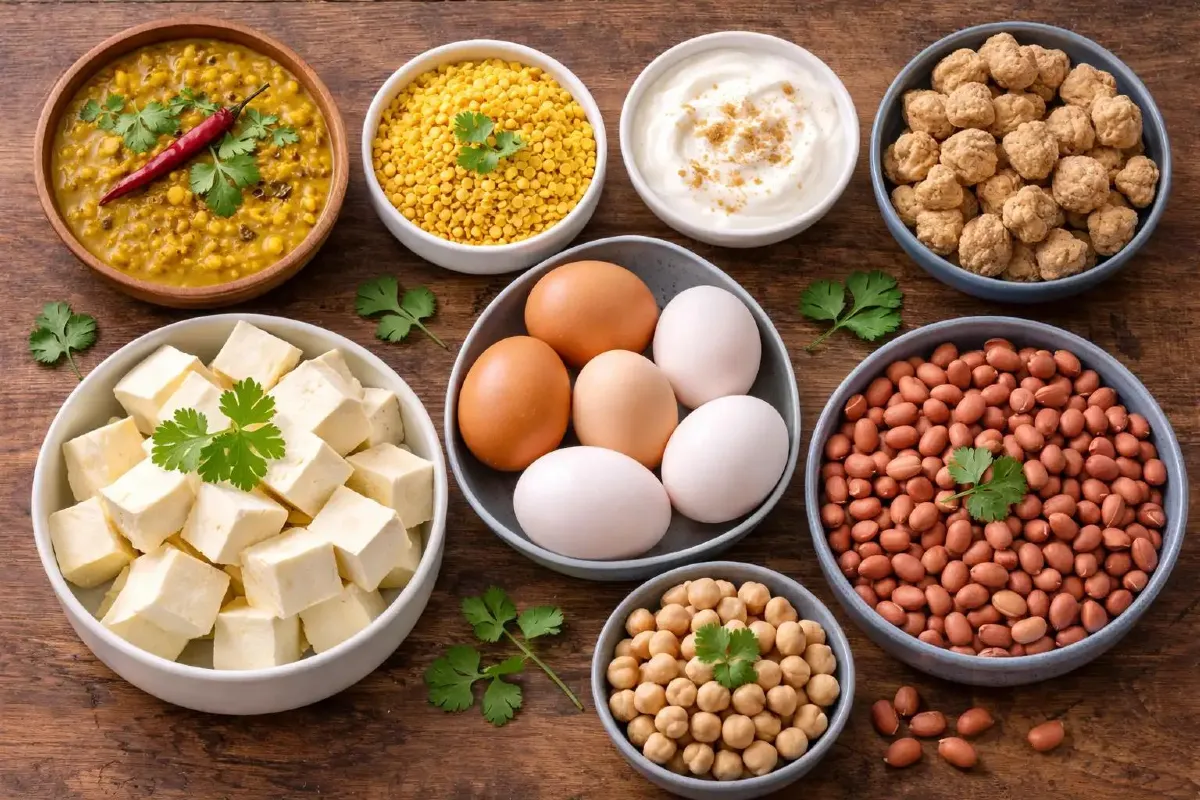
Eggs, chicken, fish, milk, curd, Greek yogurt, and paneer.
Plant sources
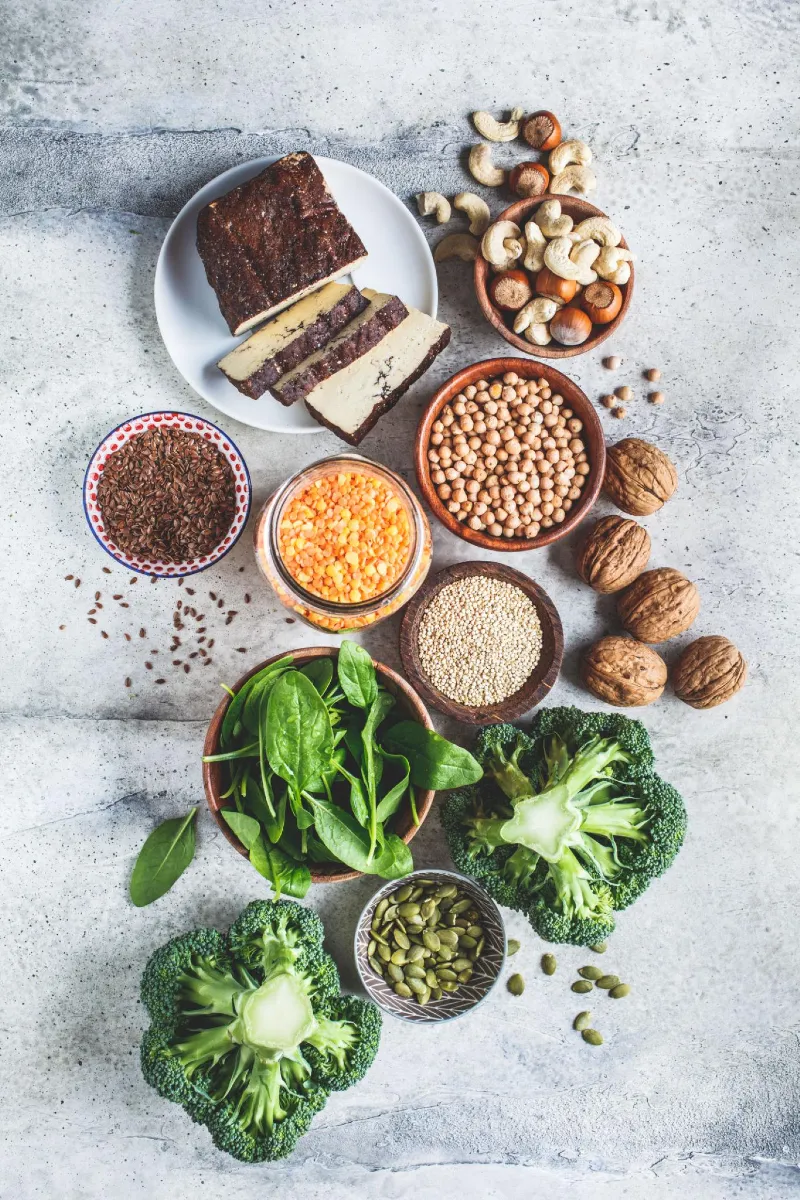
Dal, rajma, chickpeas, soybeans, tofu, peanuts, nuts, seeds, and some whole grains.
Many of these foods provide more than protein. Lentils, for example, provide protein as well as fiber and other nutrients. Nuts provide protein alongside healthy fats. Fish can provide protein along with omega-3 fatty acids.
This is why it is useful to think about the whole food, not just its protein number. Harvard Nutrition Source
Can Vegetarians Get Enough Protein?
Absolutely.
You do not need chicken or whey protein to meet your protein needs.
A vegetarian diet can provide plenty of protein when it includes a variety of foods.
Dal, rajma, chole, soy, tofu, paneer, milk, curd, nuts, and seeds can all contribute to your daily intake.
The key is variety.
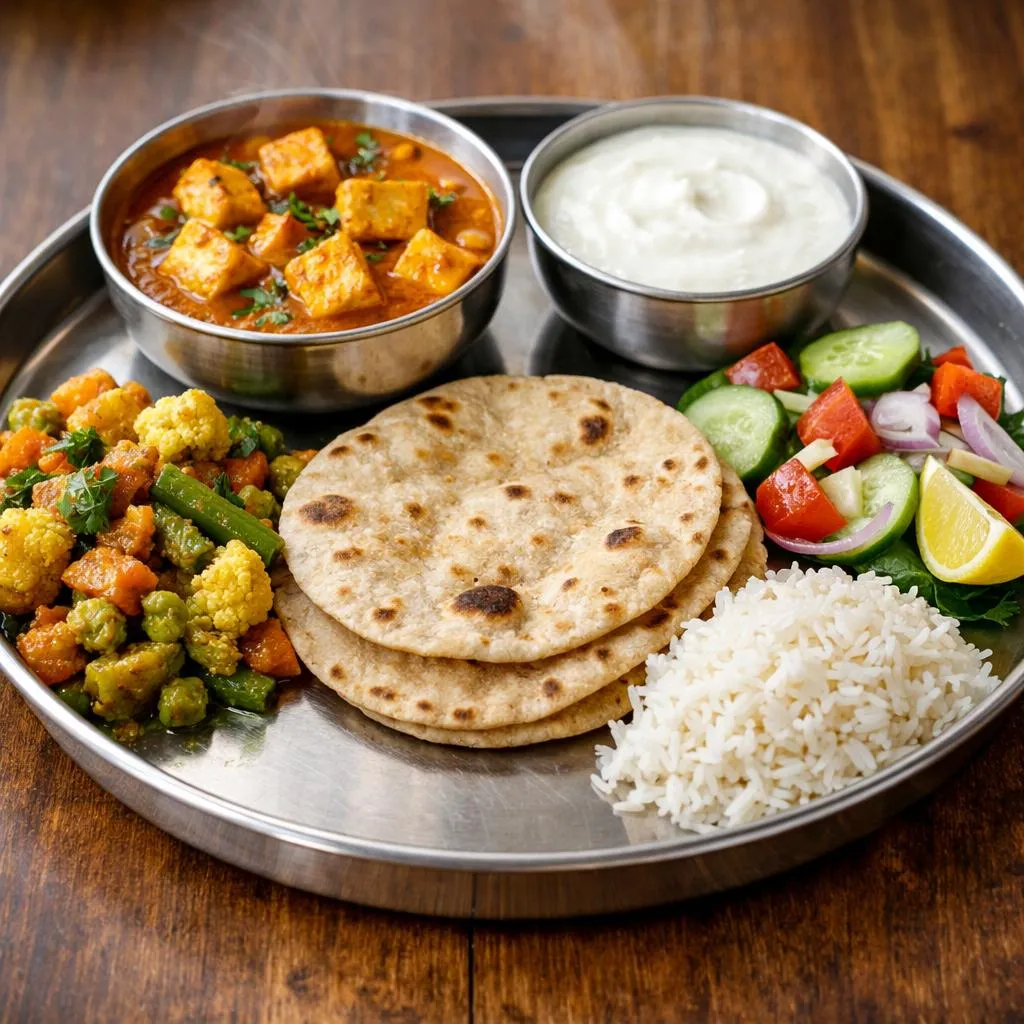
Instead of eating the same food every day, rotate your sources. You might have dal with rice one day, rajma with roti another day, tofu or paneer at dinner, and eggs or curd as part of breakfast if you eat them.
You also do not need to perfectly combine different proteins at every meal. Focus on having a varied diet throughout the day.
Do You Need Protein Powder?
No.
Protein powder is a convenient way to increase your protein intake, but it is not a requirement for building muscle or being healthy.
If you can comfortably get enough protein from regular food, there is no reason you must use a supplement.
Protein powder can still be useful when you have a busy schedule, struggle to eat enough protein, or need something convenient after training.
If you use one, read the nutrition and ingredient labels. Protein powders can contain added sugar, sweeteners, flavorings, and other ingredients, and products can differ significantly. Harvard Nutrition Source
The important thing is to treat protein powder as a convenient food supplement, not as a magic muscle-building product.
Do You Need Protein Immediately After a Workout?
You have probably heard about the famous "30-minute protein window."
The reality is much less complicated.
Getting enough protein throughout the day is more important than worrying about consuming it within a very specific few-minute window after your workout.
For people who exercise, spreading protein across several meals can be a practical approach. The ISSN suggests that around 20 to 40 grams of high-quality protein per serving can be useful depending on the person's size and circumstances.
So instead of worrying about whether you had your shake 25 or 45 minutes after training, focus on the bigger picture:
Are you getting enough protein consistently every day?
That matters much more.
What Does This Look Like in an Indian Diet?
You do not need to completely change the way you eat.
Start with the meals you already have.
For breakfast, instead of having only tea and toast, you could add eggs, paneer, tofu, milk, or curd.
For lunch, combine your usual rice or roti with dal, vegetables, curd, and another protein source if needed.
For an evening snack, roasted chana, curd, milk, peanuts, eggs, or another protein-rich food can be a better option than relying only on biscuits or packaged snacks.
For dinner, you could have dal with vegetables and roti, along with paneer, tofu, chicken, or fish depending on your preferences.
The idea is not to remove carbohydrates.
Rice, roti, potatoes, and other carbohydrate-rich foods can all be part of a healthy diet.
The goal is simply to make sure that protein has a place on your plate too.
More Protein Does Not Automatically Mean Better Health
The current focus on protein can sometimes make it seem like protein is the only nutrient that matters.
It isn't.
Your body also needs carbohydrates, healthy fats, fiber, vitamins, minerals, and adequate fluids.
A meal containing 40 grams of protein is not automatically healthy if it contains very little fiber, few vegetables, and lots of highly processed ingredients.
Instead of asking only:
"How much protein does this have?"
also ask:
"What else am I getting from this food?"
That small change in thinking can lead to much better food choices.
The Simple Takeaway
Protein is important, but you do not need to make it complicated.
For most healthy adults, around 0.8 g/kg/day is a basic starting point. If you exercise regularly, your needs may be higher. People who strength train often benefit from somewhere around 1.4 to 2.0 g/kg/day, depending on their individual situation.
Start by including a good protein source in your major meals.
Eat a variety of foods.
Choose minimally processed protein sources more often.
And remember that protein is only one part of a healthy diet.
The goal isn't to eat as much protein as possible. The goal is to eat enough protein, from good sources, as part of a balanced diet you can actually maintain.
References and Further Reading
Disclaimer: This article is for general educational purposes and is not medical advice. Protein requirements can vary based on age, pregnancy, health conditions, kidney function, activity level, and other individual factors. If you have a medical condition or specific dietary requirements, speak with a qualified healthcare professional or registered dietitian.