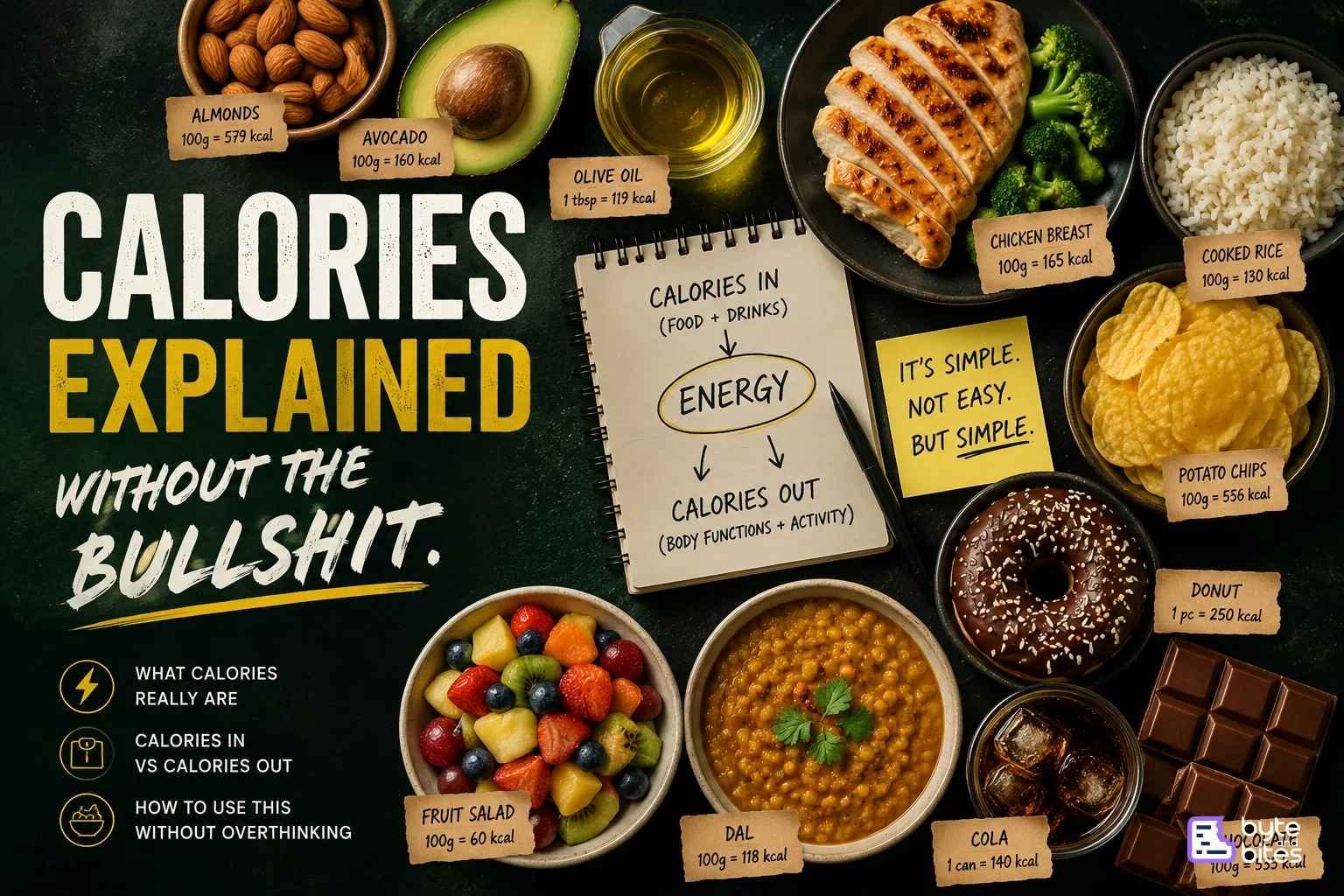
Calories have somehow become one of the most confusing words in nutrition.
You hear that you need to burn calories, that eating after 8 PM causes weight gain, that some foods have negative calories, and that cutting calories is the secret to losing weight.
Some of these ideas contain a little truth. Others are complete nonsense.
So let's forget the diet industry for a moment and answer a simple question:
What exactly is a calorie?
What Is a Calorie?
A calorie is simply a unit of energy.
The calories listed on food labels tell you how much energy your body can get from that food. Technically, the numbers we call calories are kilocalories, but "calories" is the term commonly used in nutrition. USDA FoodData Central
Your body needs this energy for everything it does.
Breathing, keeping your heart beating, maintaining body temperature, digesting food, walking, working, exercising, and even sleeping all require energy.
Think of calories as the energy currency of your body.
Food gives you energy. Your body spends that energy.
The interesting part is what happens when the amount coming in consistently differs from the amount being used.
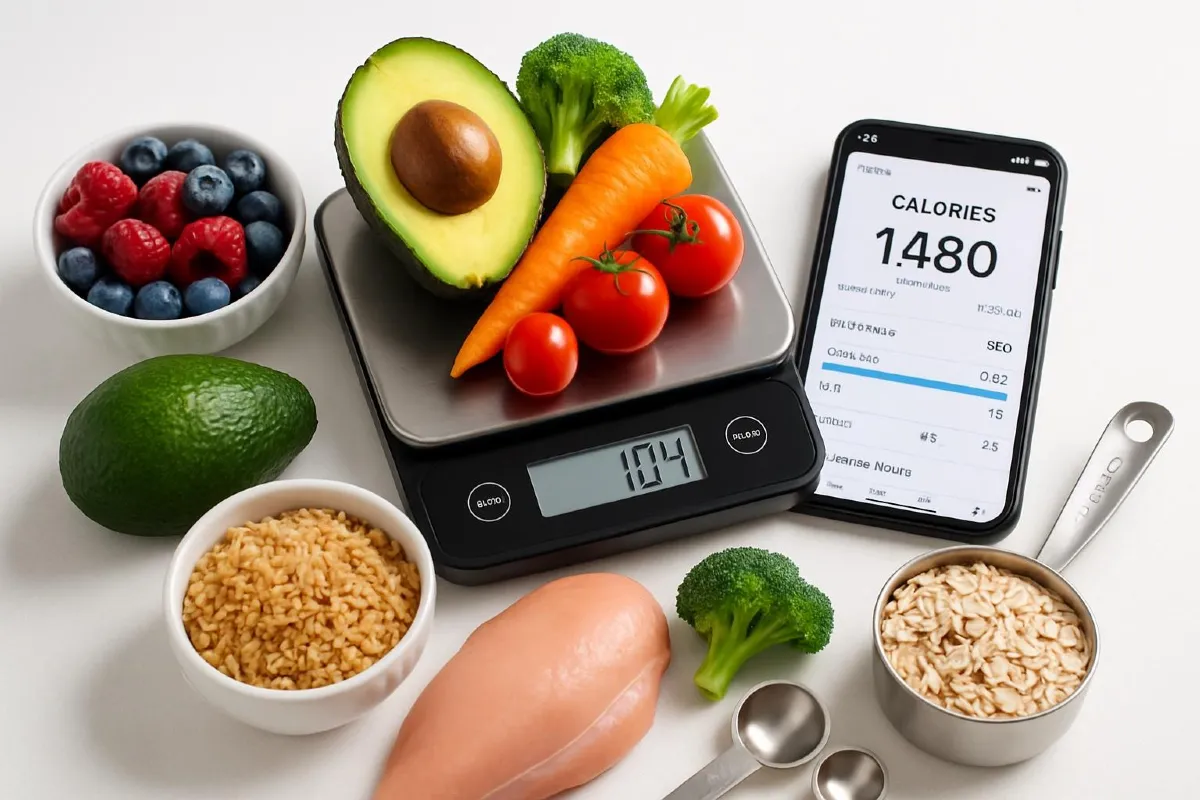
Calories In vs Calories Out
This is the basic idea behind energy balance.
If you consistently consume more energy than your body uses, the excess energy is stored, and body weight can increase over time.
If you consistently consume less energy than your body uses, your body has to draw on stored energy, and body weight can decrease over time.
If your energy intake and expenditure are roughly balanced, your body weight tends to remain relatively stable.
That's the basic principle.
But "calories in vs calories out" doesn't mean your body is a perfectly predictable calculator.
Your energy expenditure includes several things. The energy your body needs to stay alive, the energy used for physical activity, and the energy involved in digesting and processing food. Your metabolism and activity levels can also change as your food intake and body weight change. NIDDK
So the equation is simple.
The biology behind it is not always simple.
What Is a Calorie Deficit?
A calorie deficit means you're consuming less energy than your body is using.
For example, imagine your body uses roughly 2,400 calories per day and you consistently consume around 2,000.
That's a theoretical 400-calorie daily deficit.
Over time, your body needs to make up that energy difference from stored energy.
This is why a calorie deficit is fundamental to weight loss.
But that doesn't mean you should simply eat as little as possible.
Your body still needs enough energy and nutrients to function properly. Extreme restriction can make it harder to get adequate protein, fiber, vitamins, minerals, and other nutrients.
The goal is not:
"Eat the fewest calories possible."
The goal is:
"Create a reasonable deficit while still eating enough nutritious food."
What About Calories for Weight Gain?
The same principle works in the opposite direction.
If you consistently consume more calories than your body uses, you are in a calorie surplus.
That can lead to weight gain.
This is useful if you're intentionally trying to gain weight or build muscle.
But again, eating more calories doesn't automatically mean building more muscle.
If your goal is muscle gain, your diet still needs enough protein, your training needs to provide an appropriate stimulus, and the extra calories should ideally come from nutritious foods.
A calorie surplus built mostly around sweets and ultra-processed foods is very different from one built around foods such as rice, potatoes, dairy, eggs, legumes, nuts, vegetables, fruits, and lean proteins.
Does Every Calorie Count the Same?
This is where things get more interesting.
From an energy perspective, calories are calories.
But foods are not nutritionally identical.
Consider two snacks that contain 300 calories.
One might be a handful of nuts and fruit.
The other might be a sugary snack with very little protein or fiber.
Both provide energy, but they can affect fullness, nutrition, and how easy it is to keep eating very differently.
Protein and fiber can make meals more filling, while foods that are highly processed can sometimes be easier to consume quickly in large quantities.
So calories matter, but where those calories come from matters too.
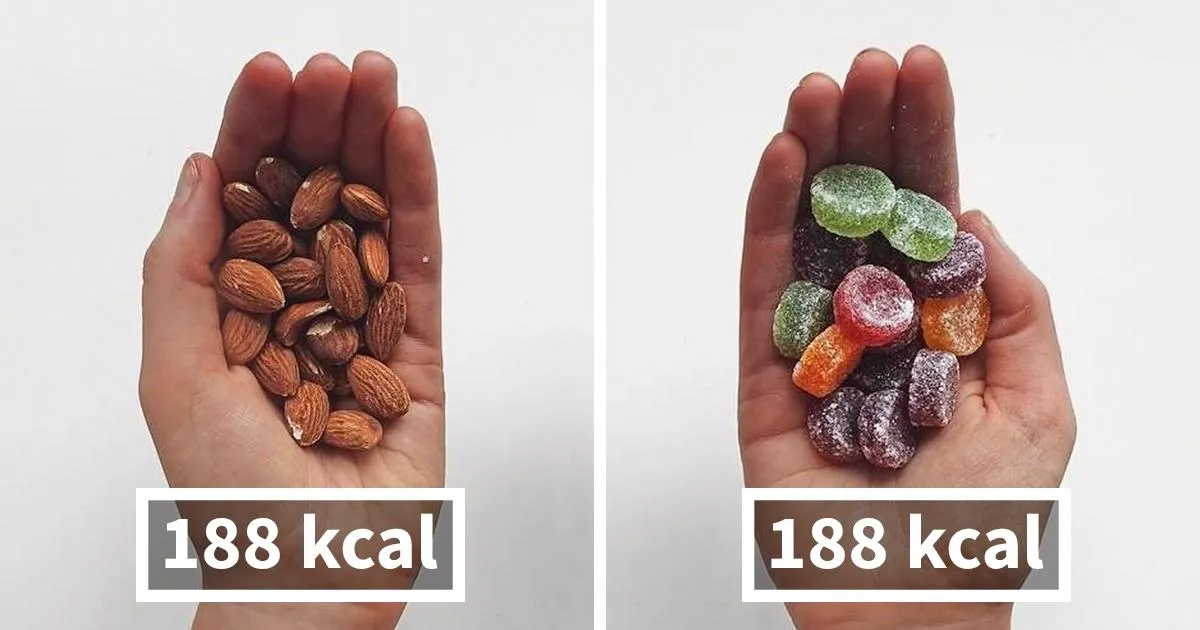
Why "Healthy Food" Can Still Have Lots of Calories
Here's another common misunderstanding.
Healthy doesn't always mean low-calorie.
Nuts, seeds, avocado, olive oil, peanut butter, and cheese can all be part of a healthy diet, but they are relatively energy-dense.
For example, a tablespoon of oil can contain around 120 calories.
You could easily add several tablespoons while cooking without realizing how much energy you've added.
That doesn't make oil unhealthy.
It simply means portion size matters.
The same applies to nuts, peanut butter, ghee, and other calorie-dense foods.
Healthy food can still contribute significantly to your total calorie intake.
Why Food Labels Matter
Calorie counting becomes much easier when you understand food labels.
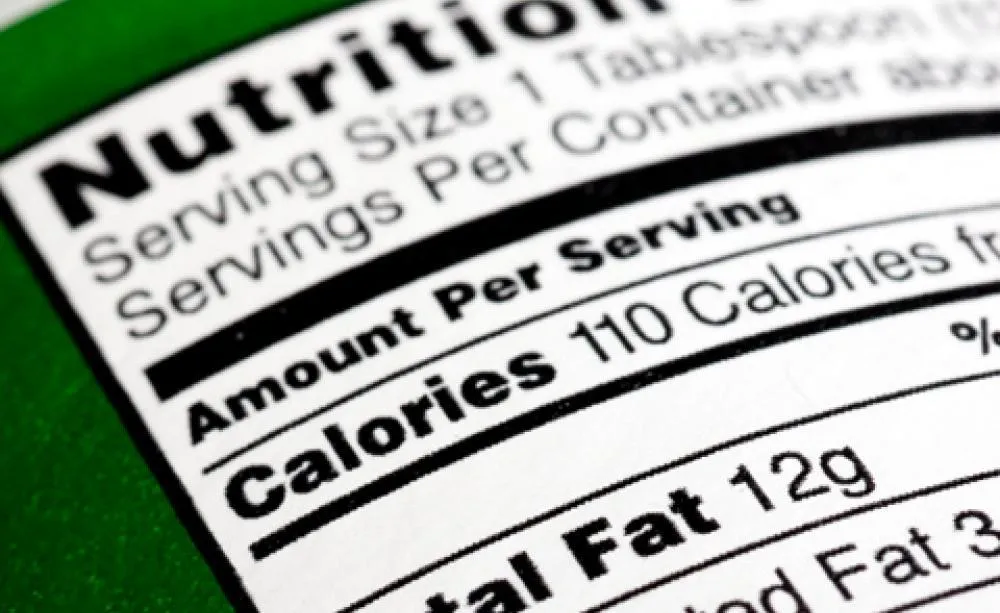
One of the biggest mistakes people make is looking only at the calorie number and ignoring the serving size.
A package might say:
200 calories per serving
But the package could contain three servings.
If you eat the entire package, you're actually consuming around 600 calories.
The serving size on a nutrition label is not necessarily the amount you should eat. It simply tells you what quantity the listed nutrition information refers to. NIDDK
Do You Need to Count Every Calorie?
No.
Calorie tracking can be useful, especially when you're trying to understand how much you're actually eating.
But you don't necessarily need to weigh every ingredient for the rest of your life.
For some people, tracking for a few weeks can simply be an education tool. You might discover that your "small" handful of nuts is much larger than you thought, or that cooking oil contributes more calories than expected.
For others, tracking can become unnecessary.
You can also manage calorie intake by paying attention to portions and building meals around protein, vegetables, fruits, whole grains, legumes, and other nutrient-dense foods.
The best approach is the one you can actually maintain.
So, How Many Calories Do You Need?
There isn't one correct number.
Your calorie needs depend on factors including your age, body size, sex, metabolism, and physical activity. NIDDK
Two people of the same weight can have very different calorie requirements if one is sedentary and the other trains regularly.
That's why blindly copying someone's "1,500 calorie diet" from Instagram is usually a bad idea.
Your calorie target should make sense for your body and your goal.
The Simple Takeaway
Calories aren't good or bad.
They're simply a measurement of energy.
If you're trying to lose weight, you generally need a sustained calorie deficit.
If you're trying to gain weight, you generally need a sustained calorie surplus.
If you're trying to maintain your weight, your average intake and expenditure need to be relatively balanced.
But don't stop at the calorie number.
A 500-calorie meal can be nutritious or mostly empty calories.
Look at the bigger picture:
How much protein are you getting?
How much fiber?
Are you eating enough vegetables and fruit?
Are most of your foods minimally processed?
Are your portions reasonable?
Calories are useful information.
They just aren't the entire story.
The goal isn't to fear calories. It's to understand them.
Disclaimer: This article is for general educational purposes and is not medical advice. Individual calorie needs vary significantly based on factors such as age, body size, activity, health, and personal goals.