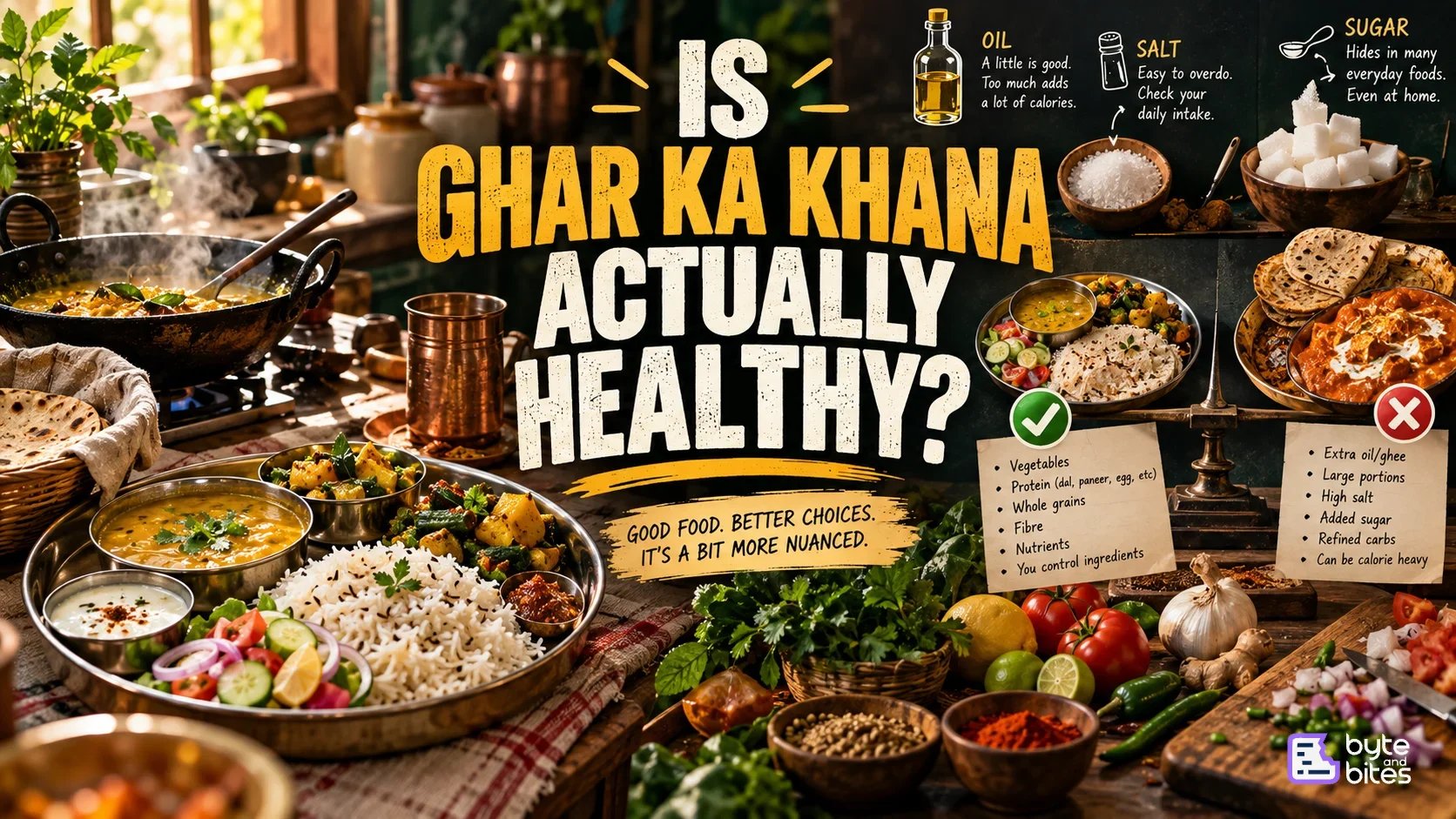
Home-cooked food is usually a great starting point, but “ghar ka bana hai” does not automatically make a meal healthy. A plate can be nutritious or calorie-heavy depending on how much oil, salt, sugar and refined carbohydrates go into it. Here’s how to look at everyday Indian food without unnecessarily demonising roti, rice, ghee or potatoes.
Is ghar ka khana automatically healthy?
Honestly, no.
But it is often easier to make healthy than restaurant or packaged food.
That distinction matters.
When our mother makes dal, sabzi, roti and rice at home, we generally know what went into the food. There is no mystery sauce, industrial shortening or giant restaurant-sized serving hiding somewhere in the kitchen.
But then comes the famous Indian sentence:
“Ghar ka hai, aur kya unhealthy hoga?”
Well, that depends on what happened between the kadhai and our plate.
A perfectly ordinary home meal can contain plenty of vegetables, pulses, whole grains and protein. It can also contain three tablespoons of oil, extra ghee, a mountain of rice, four rotis and a sweet drink.
Same kitchen. Very different meal.
The good news: Indian home food has a lot going for it
Traditional Indian meals actually have many of the things nutrition guidelines recommend.
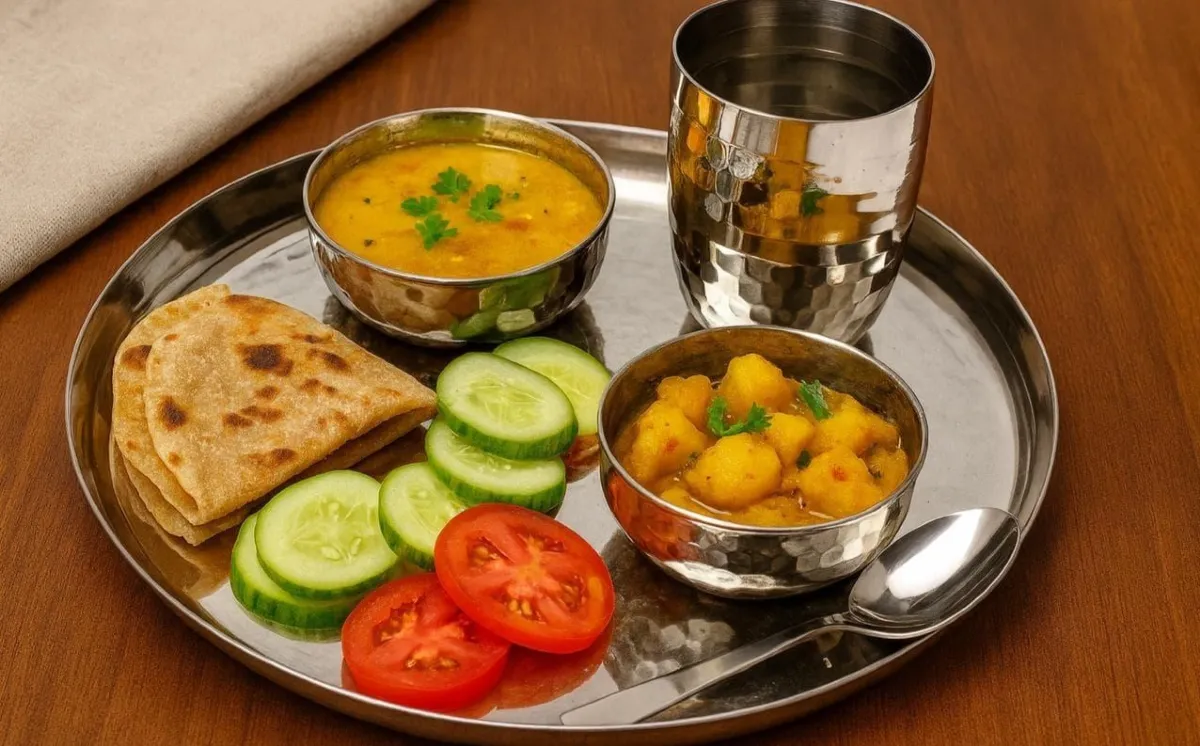
Think about a basic plate:
Dal: protein, fibre and several micronutrients.
Sabzi: vegetables, fibre, vitamins and minerals.
Roti or rice: carbohydrates for energy.
Curd: protein, calcium and other nutrients.
Fruit: more fibre, vitamins and minerals.
Add some nuts, seeds, eggs, fish or paneer depending on your diet and you can build a pretty solid meal without buying quinoa from another continent.
WHO recommends diets built around a variety of vegetables, fruits, legumes, whole grains, nuts and appropriate protein sources, while limiting excess salt, free sugars and unhealthy fats.
So no, roti isn't the villain. Rice isn't the villain either.
The bigger question is what the entire plate looks like.
The real problem hiding in the kitchen: Oil
This is where things get interesting.
Oil is extremely calorie-dense. We don't need to stop using it. We just need to realise how quickly the quantity adds up.
That innocent-looking sabzi can become very different nutritionally when it starts swimming in oil.
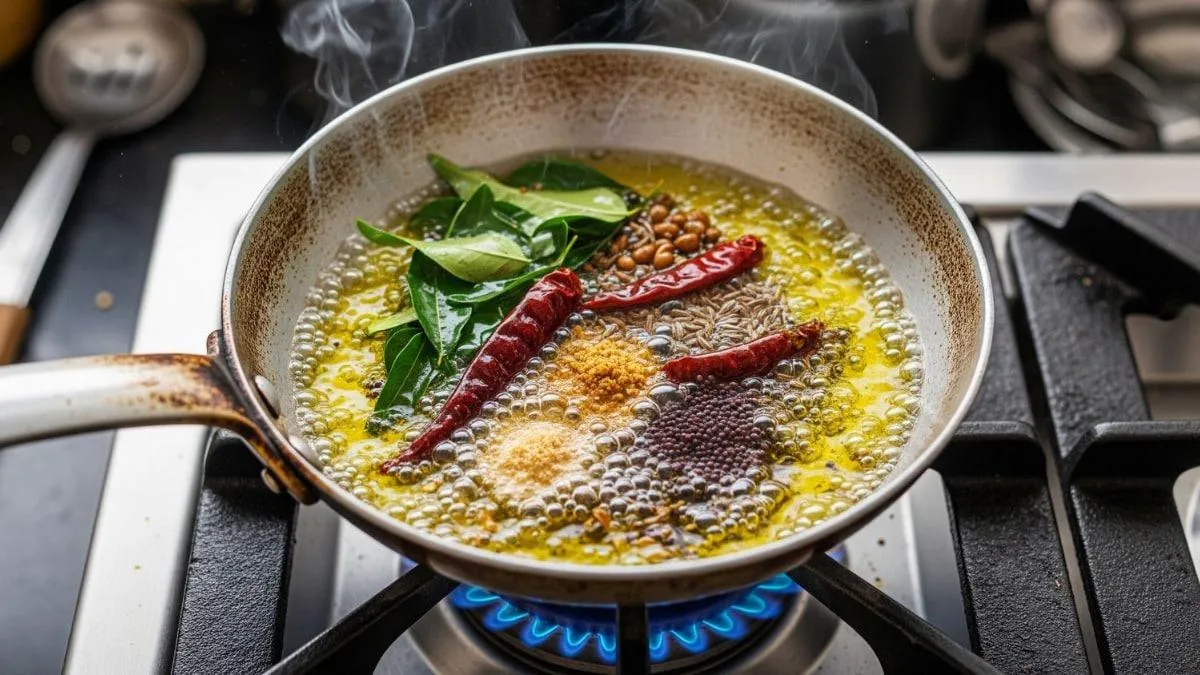
And then comes tadka.
A little tadka can make dal taste like heaven. Five rounds of “thoda aur ghee daal do” can turn the same dal into a much heavier meal.
The solution isn't to ban oil or ghee.
It's simply to use enough for cooking and flavor rather than treating oil as an ingredient that needs its own serving size.
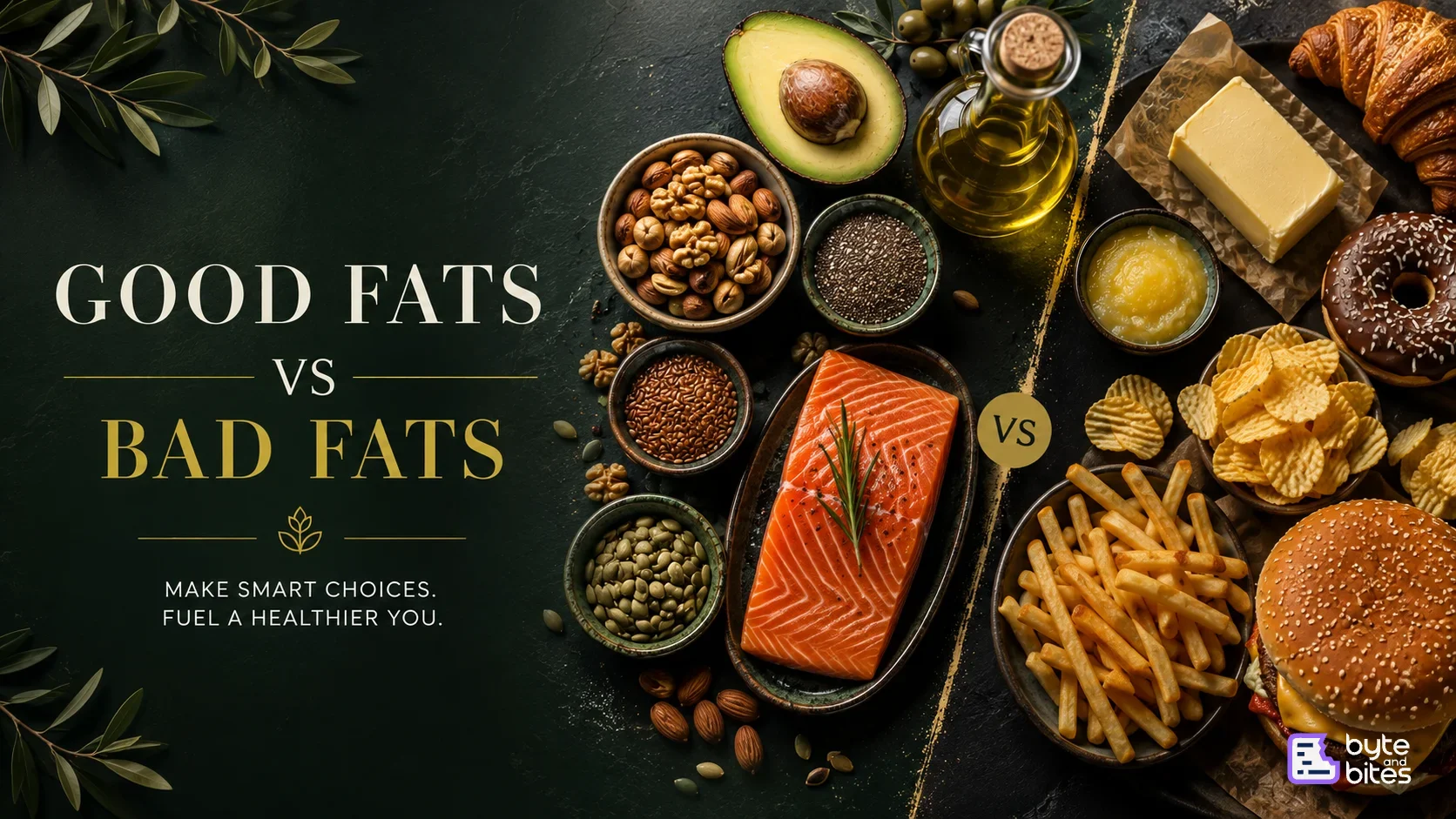
WHO recommends favouring unsaturated fats over saturated fats and keeping total fat intake moderate. Good Fats vs Bad Fats
Then there is the roti vs rice debate
This debate has survived longer than most Indian family WhatsApp groups.
“Rice makes us fat.”
“Roti is healthier.”
“Don't eat carbs at night.”
Most of these statements are far too simplistic.
Rice and roti can both fit into a healthy diet. What matters is quantity, preparation and what we eat alongside them.
A bowl of rice with dal, vegetables and curd is one thing.
A giant plate of rice with very little protein or vegetables is another.
Likewise, two rotis with dal and sabzi is very different from six rotis brushed generously with ghee.
The food isn't necessarily the problem.
The plate is.
Even healthy food can become unhealthy in large portions
This is probably the biggest thing we forget about ghar ka khana.
Healthy foods still contain calories.
Nuts are nutritious. Eating half a kilo of them isn't necessarily a brilliant idea.
Paneer provides protein and nutrients. A giant paneer curry loaded with cream and oil is another story.
Potatoes aren't junk food. But potatoes deep-fried and eaten with another giant serving of carbs are a different meal.
Even homemade sweets are still sweets.
“Made at home” tells us where the food came from. It doesn't tell us its nutritional profile.
What about salt and sugar?
Indian cooking can quietly rack up both.
There is salt in the cooking, salt in pickles, papad, chutneys, namkeen and packaged foods. Sugar can sneak into chai, biscuits, desserts, sauces and drinks.
WHO recommends keeping adult salt intake below 5 grams per day and free sugars below 10% of total daily energy intake, with further reduction in free sugar offering additional benefits.
We don't have to make food tasteless.
Spices, herbs, lemon, ginger, garlic, chilli and other flavourings can do a lot of the heavy lifting.
So what does a genuinely healthy Indian home meal look like?
It doesn't need to look like an Instagram “clean eating” bowl.
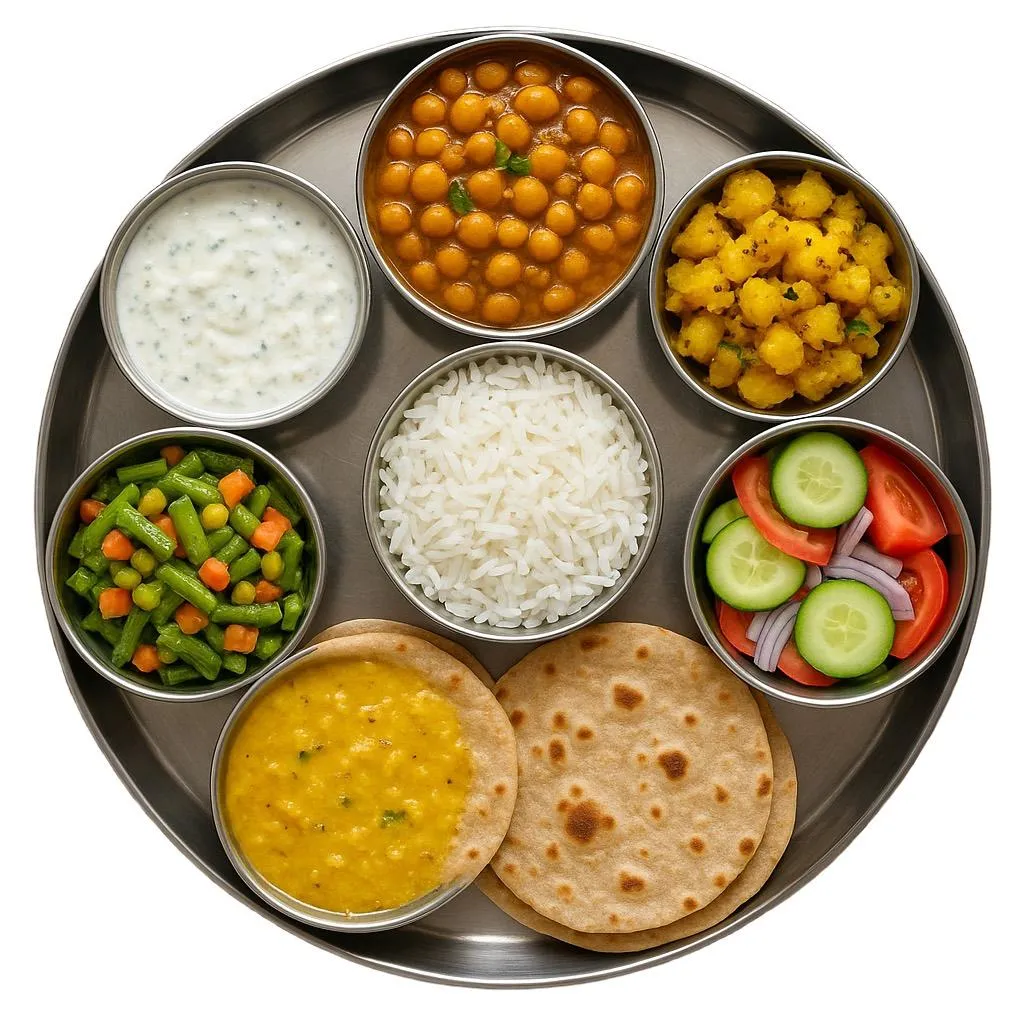
It can look like this:
Dal + sabzi + roti + curd + salad.
Or:
Rice + rajma + vegetables + curd.
Or:
Eggs + roti + vegetables + fruit.
Or:
Fish/chicken + rice/roti + sabzi + salad.
The exact combination can change depending on your diet, culture, activity level and health needs.
The basic idea stays the same: include a good source of protein, plenty of vegetables or other fibre-rich foods, a sensible portion of carbohydrates, and don't let oil, sugar and salt quietly take over the plate.
The biggest advantage of ghar ka khana
Here is where home cooking really wins.
- We can control the ingredients.
- We can use less oil.
- We can add more vegetables.
- We can choose whole grains more often.
- We can control the salt.
- We can decide whether dinner needs four rotis or two.
- We can replace a sugary drink with water or chaas.
- And we can actually see what went into your food.
That control is incredibly valuable.
So, is ghar ka khana actually healthy?
It can be. But “homemade” isn't a health certificate.
The healthiest version of Indian home food isn't about removing everything we grew up eating. We don't need to fear rice, stop eating rotis or throw our mother's ghee into the bin.
Instead, look at the whole plate and the whole week.
More vegetables. Enough protein. Sensible portions. Reasonable oil. Less unnecessary sugar and salt. More variety.
And maybe the most useful rule of all:
Don't ask, “Is this food healthy?”
Ask:
“How much of it am I eating, what went into making it, and what else is on my plate?”
That question will take you much further than any “rice vs roti” argument ever will.