Sugar has a strange reputation.
One minute it is being blamed for everything from weight gain to diabetes. The next, someone is telling you that sugar is simply energy and there is nothing to worry about.
The truth is somewhere in between.
Sugar is a source of energy. Your body needs glucose to function. The problem is not that you eat any sugar at all. The bigger issue is how much, how often, and where that sugar comes from.
So what actually happens after you eat it?
First, What Is Sugar?
Sugar is a type of carbohydrate.
Some foods naturally contain sugar. Fruit contains fructose, while milk contains lactose. Other sugars are added to foods and drinks during cooking or processing.
This distinction matters.
The sugar naturally present in an apple comes packaged with water, fiber, vitamins, minerals, and other nutrients. A sugary soft drink, on the other hand, can deliver a significant amount of sugar with very little nutritional value.
The WHO refers to sugars added to foods and drinks, along with sugars naturally present in honey, syrups and fruit juice, as free sugars. It recommends keeping free sugar intake below 10% of total daily energy intake, with additional benefits possible below 5%.

What Happens After You Eat Sugar?
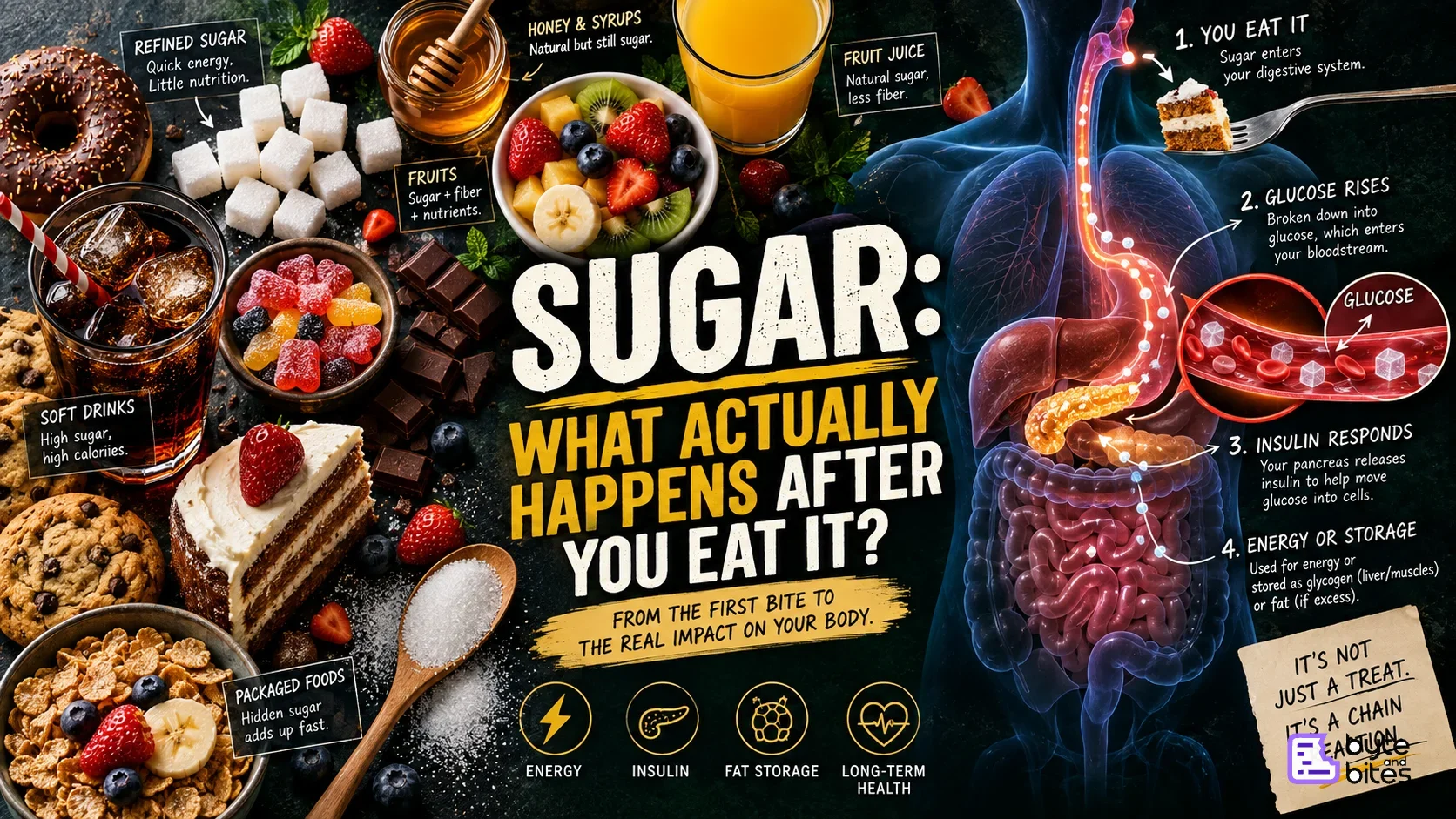
Let's say you eat a slice of cake.
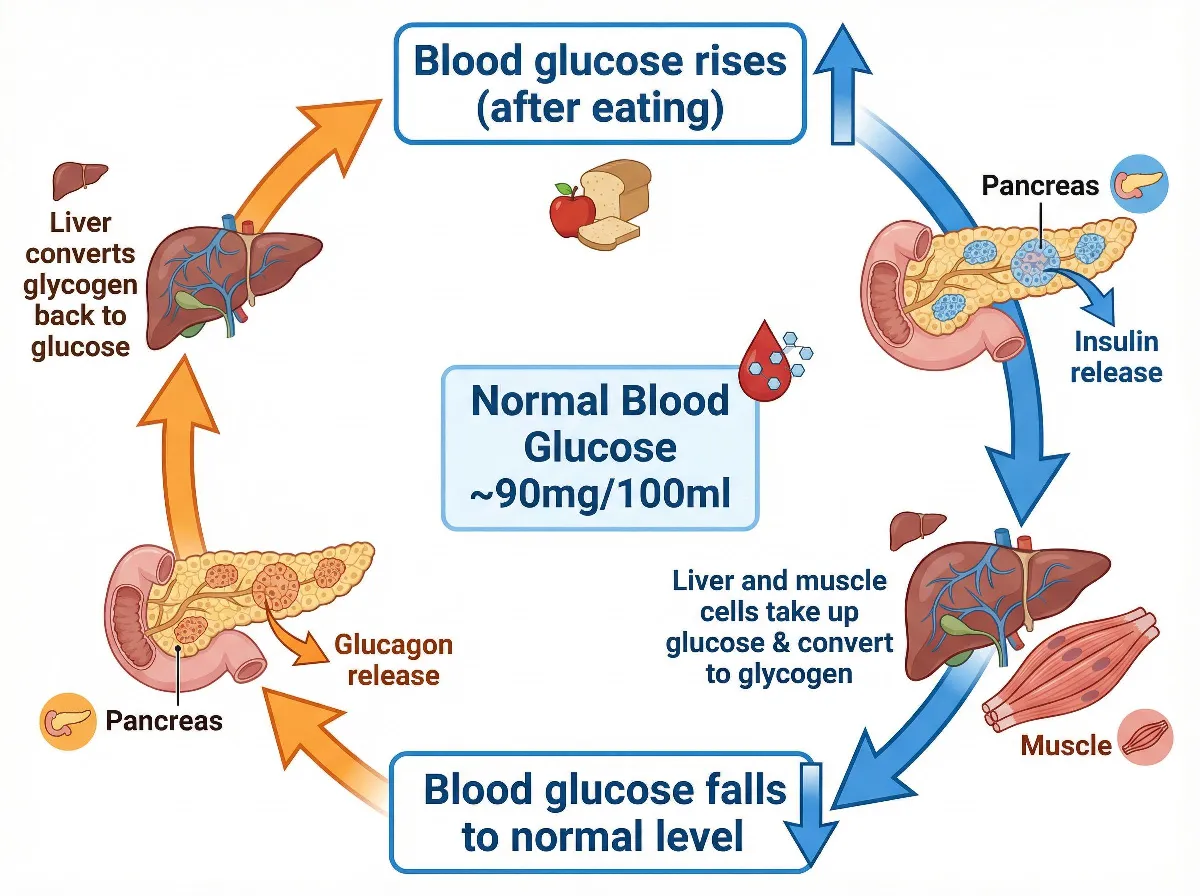
Your digestive system breaks down the carbohydrates in the food, and glucose enters your bloodstream.
Your blood glucose level rises.
Your pancreas responds by releasing insulin, a hormone that helps move glucose from your bloodstream into cells where it can be used for energy or stored for later. Harvard Nutrition Source
As your cells take up glucose, blood glucose levels begin to come back down.
This is a completely normal process.
It happens every time you eat carbohydrate-containing food.
Your body is constantly trying to keep blood glucose within a fairly narrow range because both excessively high and excessively low blood glucose can cause problems.
So What Is the "Sugar Rush"?
You've probably heard someone say:
"That sugar gave me a rush."
Eating a food high in rapidly digested carbohydrates can cause blood glucose to rise relatively quickly. The pancreas responds by releasing insulin.
But the popular idea that every sugary food causes a dramatic "sugar high" followed by an inevitable crash is an oversimplification.
The effect depends on the food, portion size, what else you ate, and how your body responds.
For example, a sugary drink is absorbed differently from a whole piece of fruit because fruit contains fiber and requires more chewing and digestion.
The overall meal matters too.
Adding protein, fat, or fiber can slow digestion and change how quickly glucose enters the bloodstream. Harvard Nutrition Source
Where Does the Extra Sugar Go?
Your body uses glucose for energy.
If you don't need all of it immediately, some can be stored as glycogen, mainly in your liver and muscles.
Once energy intake consistently exceeds what your body needs, however, excess energy can contribute to fat storage.
This is one reason regularly consuming large amounts of sugary drinks, sweets, desserts, and other high-calorie foods can contribute to weight gain.
The problem isn't that one dessert suddenly turns into body fat. It is the repeated pattern of consuming more energy than your body needs.
That distinction is important.
Having a piece of cake at a birthday party is not the same thing as drinking several sugary beverages every day.
Is Fruit Sugar Bad?
Not in the same way.
Fruit contains naturally occurring sugar, but it also comes with fiber, water, vitamins, minerals, and other beneficial compounds.
Eating a whole orange is very different from drinking orange juice.
With the whole orange, you are consuming the fruit's structure and fiber. Juice makes it much easier to consume the sugar from several oranges without the same level of fullness.
This is one reason health guidelines generally encourage whole fruit while recommending limits on fruit juice and other sugary drinks.
The WHO specifically includes sugars naturally present in fruit juice within its definition of free sugars.
What Happens If You Eat Too Much Sugar Regularly?
The occasional sweet treat isn't the main concern.
The bigger problem is consistently high intake of added or free sugars.
High intake can make it easier to consume excess calories, contributing to unhealthy weight gain. It is also strongly associated with tooth decay. WHO Free Sugars
Regularly consuming large amounts of added sugar is also associated with higher risk of health problems including obesity, type 2 diabetes, and heart disease. CDC Added Sugars
That does not mean eating sugar directly causes diabetes on its own.
Type 2 diabetes is a complex disease involving insulin resistance, genetics, body weight, physical activity, and other factors.
But a long-term diet high in added sugar, particularly through sugary drinks and excess calories, can contribute to the conditions that increase risk.
How Much Sugar Is Too Much?
The WHO recommends keeping free sugars below 10% of your total daily energy intake, and suggests that reducing them below 5% can provide additional health benefits.
For someone eating around 2,000 calories per day:
10% = about 50 grams of free sugar
The 5% target would be around:
25 grams per day
These are guidelines, not a requirement to hit an exact number every day. The bigger lesson is to become aware of how quickly sugar can add up.
A soft drink, sweetened coffee, dessert, packaged cereal, biscuits, and a sugary snack can collectively push intake much higher than expected.

Should You Stop Eating Sugar Completely?
For most people, no. There is no need to panic because you ate a dessert. A healthy diet can include foods you enjoy.
The more useful approach is to make high-sugar foods occasional rather than everyday staples.
Instead of worrying about one teaspoon of sugar in your morning tea, look at the bigger picture.
Are you drinking sugary beverages every day?
Are desserts part of every meal?
Are you eating packaged foods with large amounts of added sugar?
Those habits are much more important than obsessing over tiny amounts.
The Simple Takeaway
Sugar isn't poison.
Your body can use glucose perfectly well, and carbohydrates are an important source of energy.
The problem comes when free and added sugars become a large part of your diet, especially when they come from foods and drinks that provide lots of calories without much nutritional value.
So don't be afraid of an occasional dessert.
Instead, focus on the everyday habits that add up.
- Eat more whole foods.
- Choose whole fruit more often than juice.
- Limit sugary drinks.
- Check food labels.
And keep sweets as something you enjoy rather than something that quietly becomes a major part of your daily diet.
You don't need to eliminate sugar. You just need to stop letting it run your diet.
Disclaimer: This article is for general educational purposes and is not medical advice. Individual dietary needs can vary based on health, medications, activity level, and other factors. If you have diabetes, prediabetes, or another medical condition affecting blood glucose, consult a qualified healthcare professional or dietitian.