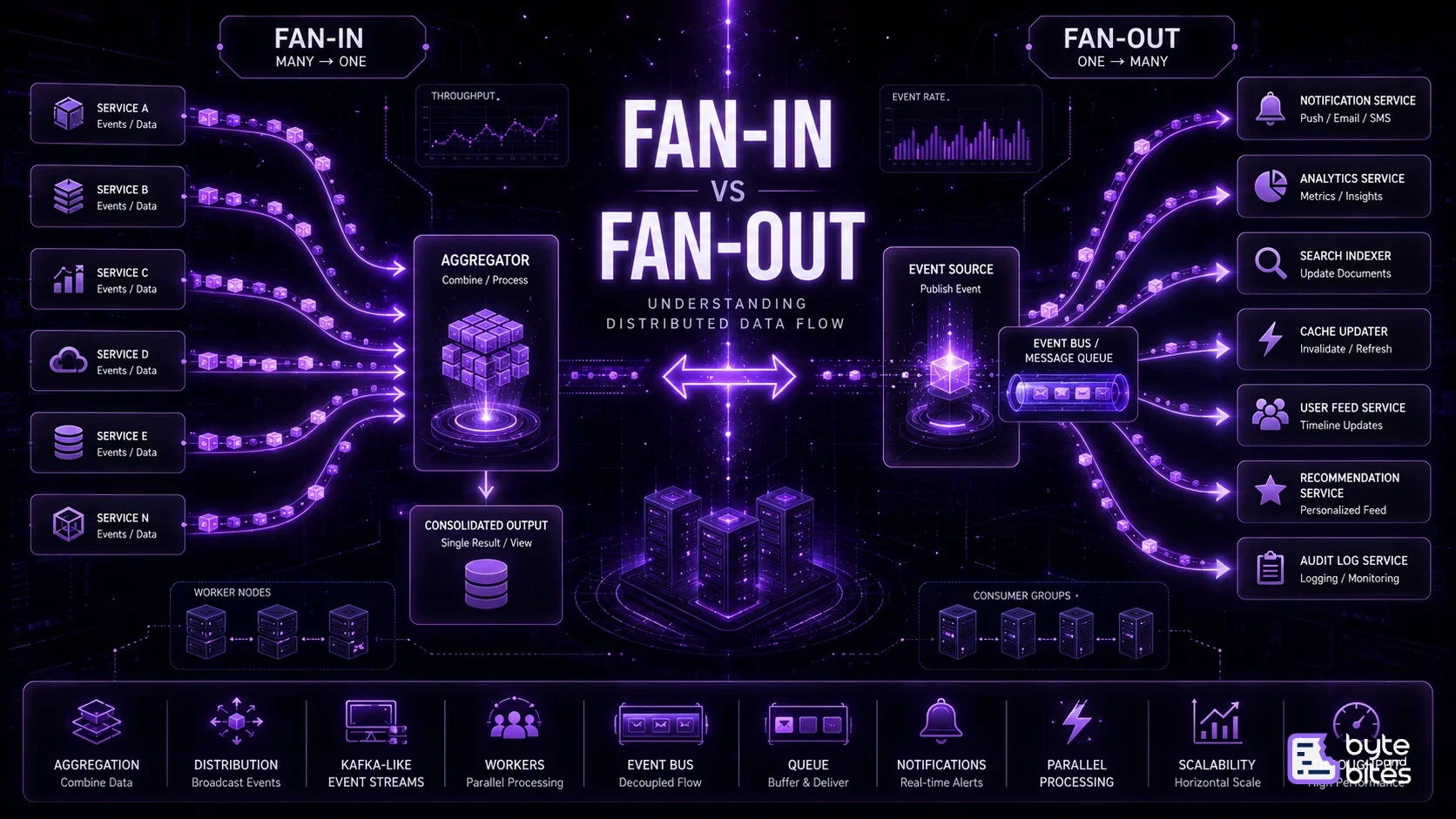
Imagine a user uploads a photo on a social media platform.
At first glance, it seems like a simple action.
But behind the scenes, that single upload triggers dozens of independent processes:
- The user's feed is updated.
- Followers receive notifications.
- Search indexes are refreshed.
- Recommendation engines process the content.
- Analytics systems record the event.
- AI moderation services scan the image.
- Cache layers are invalidated.
One user action.
Many downstream systems.
Now imagine a completely different problem.
A company needs to process 100 TB of log data.
Instead of using one massive server, the workload is divided across hundreds of workers.
Each worker processes a portion of the data independently.
Once every worker finishes, their results are combined into a single report.
Many workers.
One final result.
Although these two scenarios look very different, they are powered by two fundamental distributed system patterns:
- Fan-Out: One source distributes work to many consumers.
- Fan-In: Many producers combine work into one result.
You'll find these patterns everywhere from Kafka and event-driven architectures to search engines, analytics pipelines, recommendation systems, and MapReduce.
The Big Picture
At a high level, these two patterns are opposites.
Fan-Out
One → Many
vs
Fan-In
Many → One
One distributes work.
The other combines work.
Understanding when to use each is essential for designing scalable systems.
What is Fan-Out?
Fan-Out occurs when one event or request is delivered to multiple independent consumers.
Think of a public announcement at an airport.
One announcement is broadcast.
Thousands of passengers hear the same message.
In software, the idea is identical.
One producer emits an event.
Many services react to it independently.
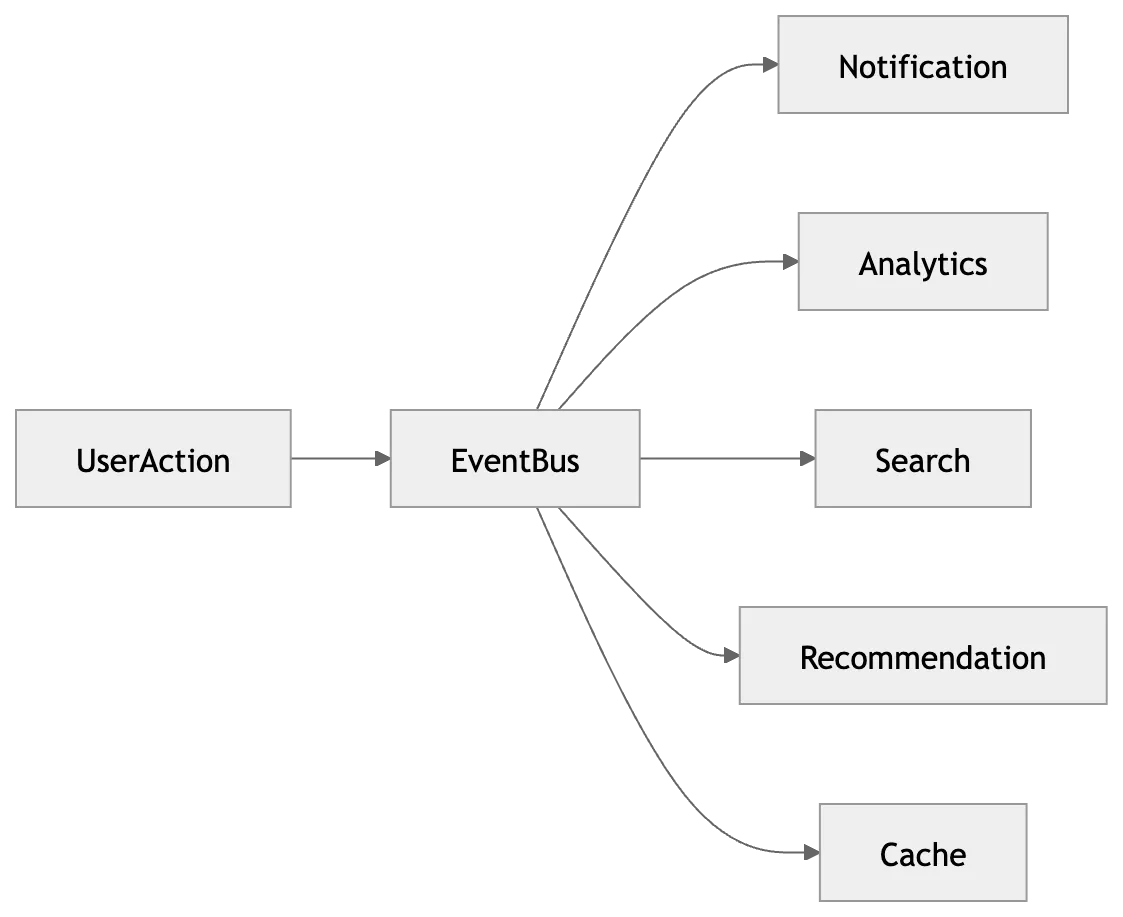
Every consumer receives the same event.
Each service performs its own work without affecting the others.
A Real-World Example: Social Media
Suppose someone uploads a new photo.
Upload Photo
│
▼
Publish Event
│
┌───┼────┬───┬───┐
▼ ▼ ▼ ▼ ▼
Feed Notification Search Analytics AI Moderation
Notice something important.
The upload service doesn't call each downstream service directly.
Instead, it simply publishes an event.
Any interested consumer can process it.
This keeps services loosely coupled.
Why Fan-Out Matters
Without Fan-Out:
Upload Service
↓
Notification
↓
Analytics
↓
Search
↓
Recommendation
↓
Cache
If one service becomes slow, the entire request slows down.
With Fan-Out:
- Every service works independently.
- The notification service can be upgraded without affecting analytics.
- Search indexing can be temporarily offline without breaking uploads.
- That's one of the biggest advantages of event-driven architectures.
Common Fan-Out Use Cases
You'll encounter Fan-Out in many systems:
- Push notifications
- Kafka consumer groups
- SNS topics
- Email broadcasts
- Webhook delivery
- Search indexing
- Cache invalidation
- Audit logging
- Recommendation systems
If one event needs to trigger multiple independent workflows, Fan-Out is usually the right choice.
What is Fan-In?
Fan-In is the opposite pattern.
Instead of one producer sending work to many consumers, multiple workers produce results that are combined into a single output.
Imagine a teacher asking ten students to solve different parts of a problem.
Once everyone finishes, the teacher combines the answers into one report.
That's Fan-In.
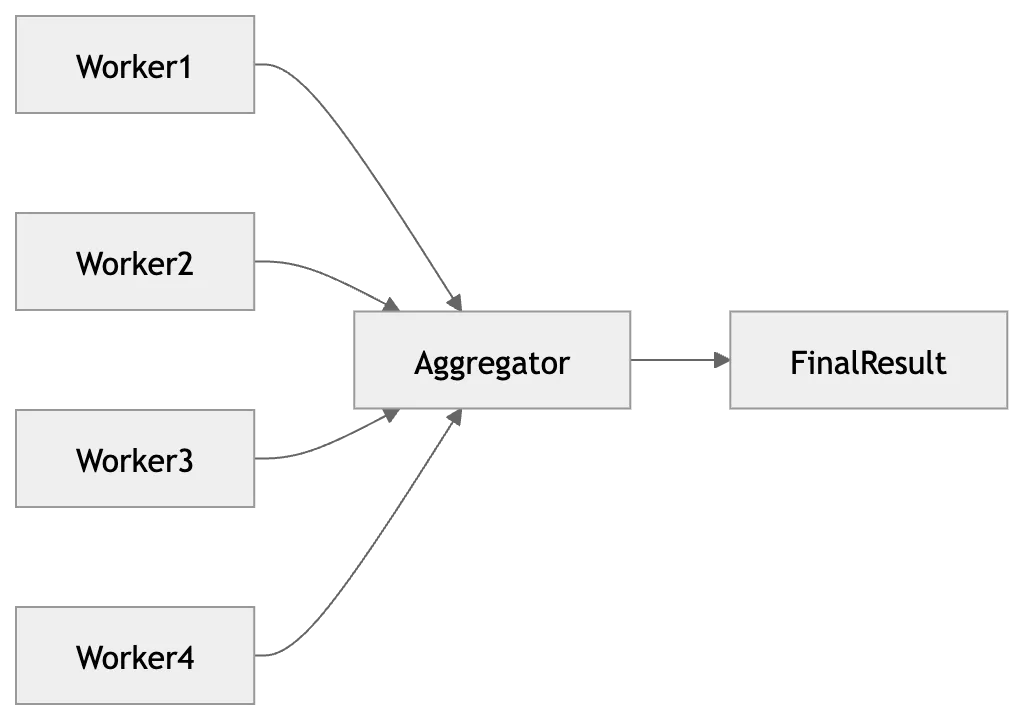
Many inputs.
One output.
A Real-World Example: MapReduce
Google popularized Fan-In through MapReduce.
Suppose we need to count words across a huge collection of documents.
Instead of processing everything on one machine:
Large Dataset
│
▼
Split Into Chunks
│
┌───┼───┬───┐
▼ ▼. ▼ ▼
Worker1 Worker2 Worker3 Worker4
│
▼
Aggregate Results
│
▼
Final Count
Each worker processes a small subset of the data.
The aggregator combines the partial results into a final answer.
Without Fan-In, processing petabytes of data would be impractical.
Fan-In + Fan-Out Together
The most interesting systems use both patterns.
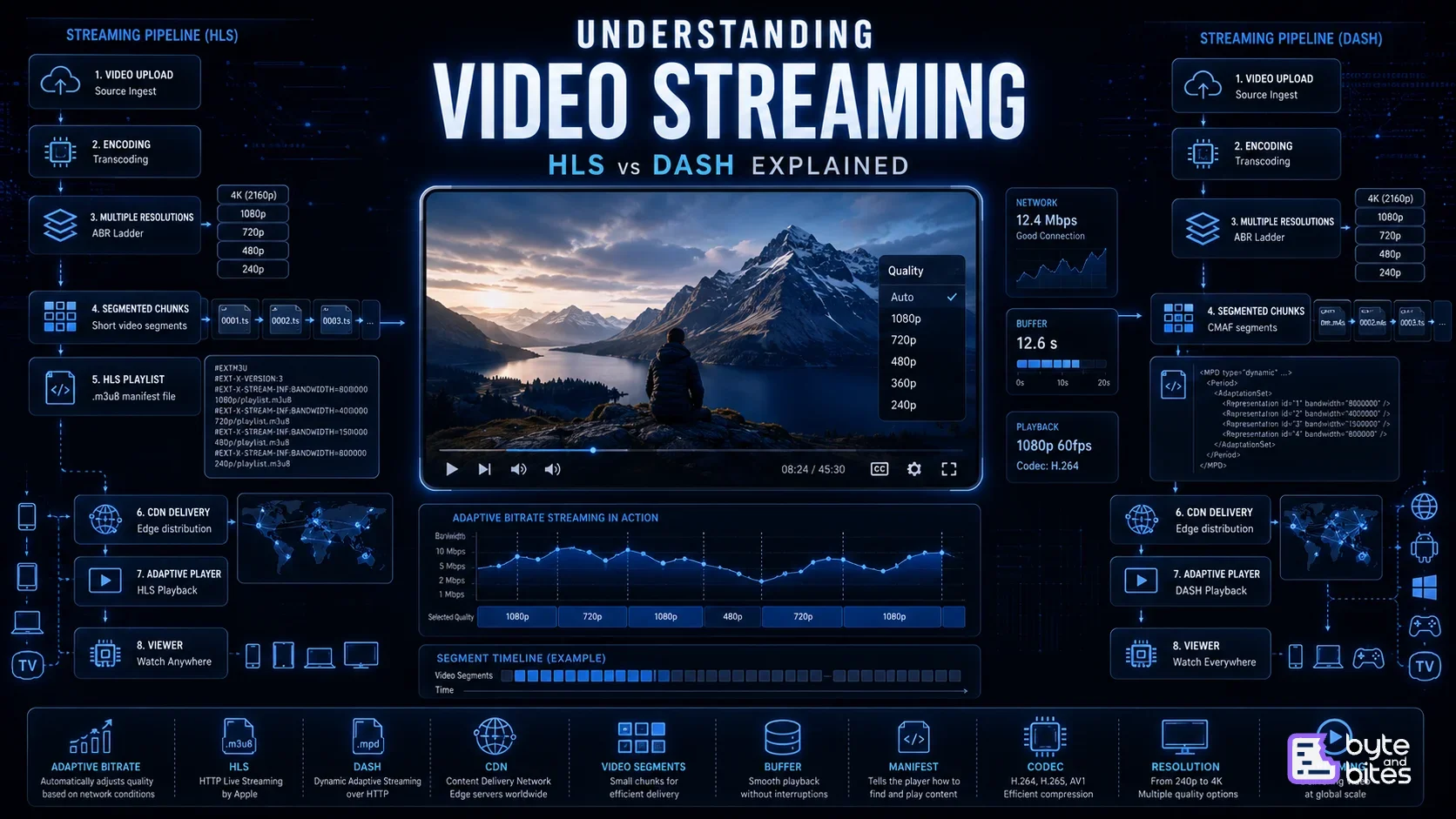
Imagine a video uploaded to a streaming platform.
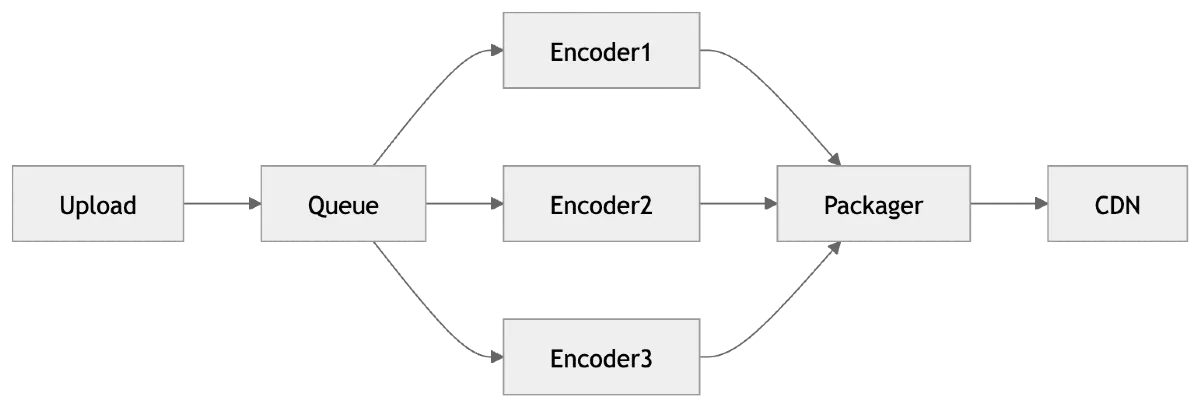
Here's what's happening:
- The upload is fanned out to multiple encoding workers.
- The encoded outputs are fanned in to a packaging service.
- The packaged video is then distributed to the CDN.
Large-scale systems rarely use just one pattern.
They combine both.
Comparing Fan-In and Fan-Out
| Feature | Fan-out | Fan-In |
|---|---|---|
| Direction | One → Many | Many → One |
| Purpose | Distribute work | Aggregate work |
| Typical Components | Event Bus, Kafka, SNS | Aggregator, Reducer |
| Parallelism | High | High |
| Common use cases | Notifications, Analytics, Search | MapReduce, ETL, Reporting |
| Bottleneck Risk | Consumer overload | Aggregator overload |
Advantages
Fan-Out
- ✅ Independent services
- ✅ Easy horizontal scaling
- ✅ Loose coupling
- ✅ Fault isolation
- ✅ Event-driven architecture
Fan-In
- ✅ Parallel processing
- ✅ Faster computation
- ✅ Efficient aggregation
- ✅ Better resource utilization
Challenges
Neither pattern is perfect.
Fan-Out Challenges
- Duplicate event handling
- Ordering guarantees
- Consumer failures
- Event replay
- Backpressure
Fan-In Challenges
- Aggregator bottlenecks
- Partial failures
- Synchronization
- Straggler workers
- Result consistency
Good system design means anticipating these issues before they become production problems.
Where You'll See These Patterns
| System | Fan-Out | Fan-In |
|---|---|---|
| Kafka | ✅ | |
| RabbitMQ | ✅ | |
| AWS SNS | ✅ | |
| Notification System | ✅ | |
| Search Indexing | ✅ | |
| Recommendation Engines | ✅ | |
| Apache Spark | ✅ | |
| Hadoop MapReduce | ✅ | |
| ETL Pipelines | ✅ | ✅ |
| Video Encoding | ✅ | ✅ |
Interview Questions
If you're interviewing for a backend or distributed systems role, expect questions like:
- How would you design a notification system for millions of users?
- Why would Kafka use Fan-Out?
- Can Fan-In become a bottleneck?
- How would you scale an aggregation service?
- How would you handle failed consumers in a Fan-Out architecture?
Understanding these patterns helps you reason about the tradeoffs behind many real-world architectures.
Key Takeaways
- Fan-Out distributes one event to many independent consumers.
- Fan-In combines results from many workers into a single output.
- Fan-Out is ideal for event broadcasting and asynchronous workflows.
- Fan-In excels at parallel processing and data aggregation.
- Most modern distributed systems use both patterns together to balance scalability, resilience, and performance.
Conclusion
Fan-In and Fan-Out aren't specific technologies. They're fundamental data flow patterns that shape how distributed systems scale. Whether you're broadcasting a single event to dozens of services or combining the work of hundreds of parallel workers, these patterns help systems remain efficient, decoupled, and resilient. Once you recognize them, you'll start seeing them everywhere, from Kafka and analytics pipelines to search engines, streaming platforms, and cloud-native architectures.
Great distributed systems aren't defined by where data is stored. They're defined by how data flows. Fan-Out spreads work efficiently, while Fan-In brings distributed work back together into meaningful results.