I love eating outside. Give me a crowded food stall, something sizzling on a tawa and a queue of people who clearly know what they're ordering, and I'm interested.
But there's one thing I almost never think about while eating: what happened to this food before it reached my plate?
Was the oil reused too many times? Was the kitchen clean? Were the ingredients stored properly? Was that bright-red Manchurian actually supposed to be that red?
Most of us don't ask.
We look at the menu, check the price and say, “Bhaiya, ek aur dena.” That's what makes Tukaram Mundhe, Maharashtra's Food and Drug Administration commissioner, such an interesting figure in India's food conversation.
Since taking charge in May 2026, Mundhe has led an unusually visible crackdown on food-safety violations across Maharashtra. Reporters reported that the FDA had conducted more than 3,000 raids and inspections, covering everything from street vendors and small eateries to luxury restaurants and major chains.
And suddenly, people who normally talk about food only in terms of taste are talking about hygiene, adulteration and food safety,that might be his biggest achievement so far. The Food Culture We Don't See We love talking about Indian food culture. Dosa. Biryani. Vada pav. Street food. Family recipes. Regional specialities.
But food culture isn't only about what lands on the plate. It's also about how safely it gets there.
Think about your favourite roadside stall. You see the hot tawa, the fresh chutney and the vendor making your food right in front of you.
What you don't see is how the ingredients were stored before you arrived, whether the oil was being reused excessively, whether raw and cooked food were separated properly or whether the cookware was actually being cleaned between uses.
That's the invisible part of food culture. And that's where food-safety regulation matters.
You Can Actually See the Mundhe Effect
This is where things get interesting. The crackdown hasn't remained inside government offices and inspection reports. People are starting to notice changes on the streets.
Take Manchurian.
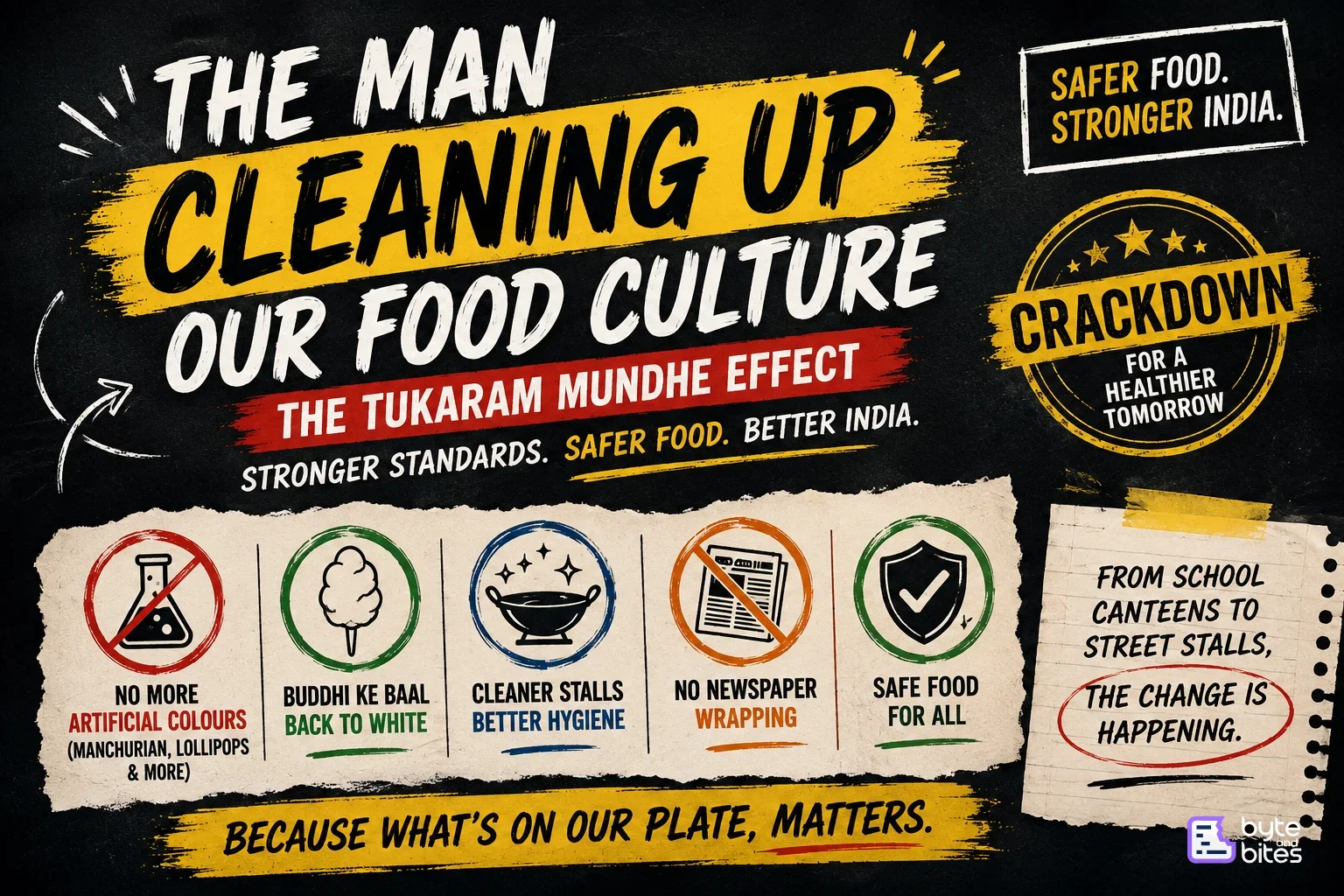
That aggressively red Manchurian ball you've seen at countless street stalls? In some Mumbai areas, vendors have reportedly stopped using synthetic colours, and the Manchurian, chicken lollipops and even shawarma marinades are appearing much closer to their natural colours. One vendor told Mid-Day that his business had eliminated synthetic food dyes and preservatives.
And then there's Buddhi ke baal.
That bright pink cotton candy suddenly started appearing white. The internet, naturally, reacted as though childhood itself had been cancelled.
But the reason is pretty straightforward: increased scrutiny of unauthorised artificial food colours has pushed vendors away from those dyes.
Honestly, I think most of us can survive white cotton candy. We came for the sugar. Not the colour.
"There's also been a visible change at some local food stalls. Reports from Mumbai have highlighted vendors becoming more careful about cleanliness, food storage, gloves, head coverings and serving practices. One report specifically documented changes at vada pav stalls following the FDA drive.
And that is the kind of change that matters."
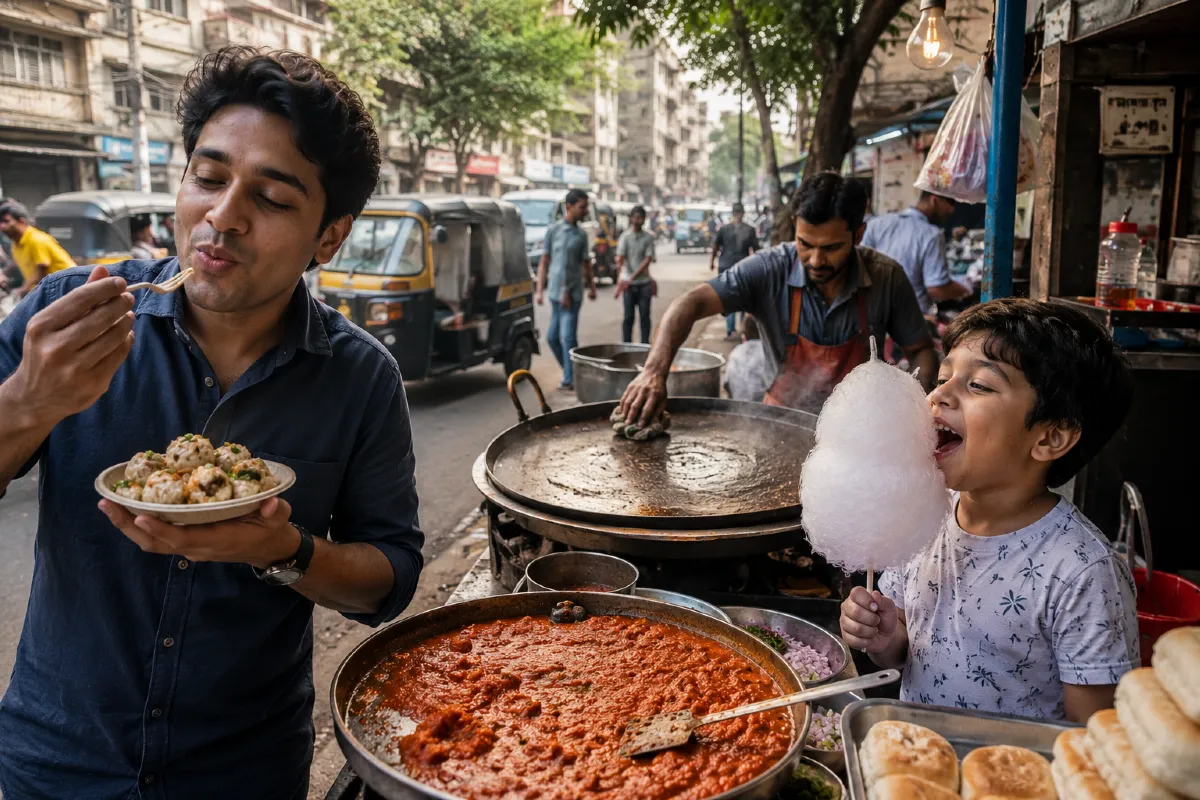
You don't need to understand food-safety regulations to notice that the person preparing your pav bhaji is finally cleaning the cooking surface properly.
Even the Newspaper Around Your Samosa Matters
Here's another one we've all done. You've bought a hot samosa, vada pav or pakora and it's been wrapped in yesterday's newspaper.
It feels harmless.
It's just paper.
Except newspapers aren't designed for food contact, and printing inks can contain substances that may migrate into food, particularly hot or oily food. FSSAI specifically directed vendors to stop using newspapers for packing or serving food in June 2026.
It's such a small change that you might barely notice it. But multiply that small change by thousands of vendors and millions of meals. That's how food culture changes. Not always dramatically. Sometimes it's just a samosa arriving in proper food paper instead of yesterday's headlines.
And This Isn't Just About Street Food
Mundhe's campaign has also reached schools, canteens and hostel kitchens.
Mumbai schools have already started changing canteen menus, with some removing vada pav, samosa and aerated drinks and replacing them with options such as idli, dosa, poha, upma and chaas.
The Maharashtra FDA has also been investigating adulteration across the milk supply chain and other food products. And on September 1, authorities announced a major Mumbai-area case involving expired branded food products being relabelled with new dates for export.
So this is much bigger than a restaurant inspection. It's about what happens from producer to plate.
But Is Strict Always Better?
Not necessarily. It's easy to cheer for strict enforcement when you're the customer. Running a restaurant is different. A genuine mistake, a compliance gap and a serious public-health violation aren't necessarily the same thing.
There has already been legal pushback against some FDA actions, with courts questioning procedure in particular cases.
That's important. Food safety should be strict. But strict doesn't mean arbitrary.
The ideal system is one where genuinely dangerous practices are stopped quickly, while businesses that can correct problems are given a clear and fair path to compliance.
So, Is Tukaram Mundhe Good for Indian Food Culture?
I'd say potentially, yes.
Not because one officer can solve India's food-safety problems. Not because every raid is automatically justified. And not because strictness is always the same thing as good governance. But because he has made people look at something they usually ignore.
We spend hours discussing where to find the best biryani, the crispiest dosa or the perfect vada pav. Maybe we should spend a few minutes asking whether it was prepared properly too and perhaps that's the real change.
Not that Mundhe is deciding what Indians should eat. He's making food businesses think twice about how they make it. And he's making consumers look twice at what they buy.
The first time because it looks delicious.
The second time because we want to know how it got there.
Before → After
Before → After
Red Manchurian → natural-looking Manchurian
Pink buddhi ke baal → white
Newspaper-wrapped food → proper food paper
Dirty pav-bhaji tawa → cleaner cookware
Street stalls becoming more conscious about hygiene
For a country as obsessed with food as India, that's not a bad change at all.