For years, the Indian holiday had a pretty predictable formula.
Save money.
Wait for the school holidays.
Book a hotel.
Visit every famous attraction in the city.
Take approximately 417 photographs.
Come home.
And then wait another year.That version of travel isn't disappearing completely, but something has definitely changed in 2026.
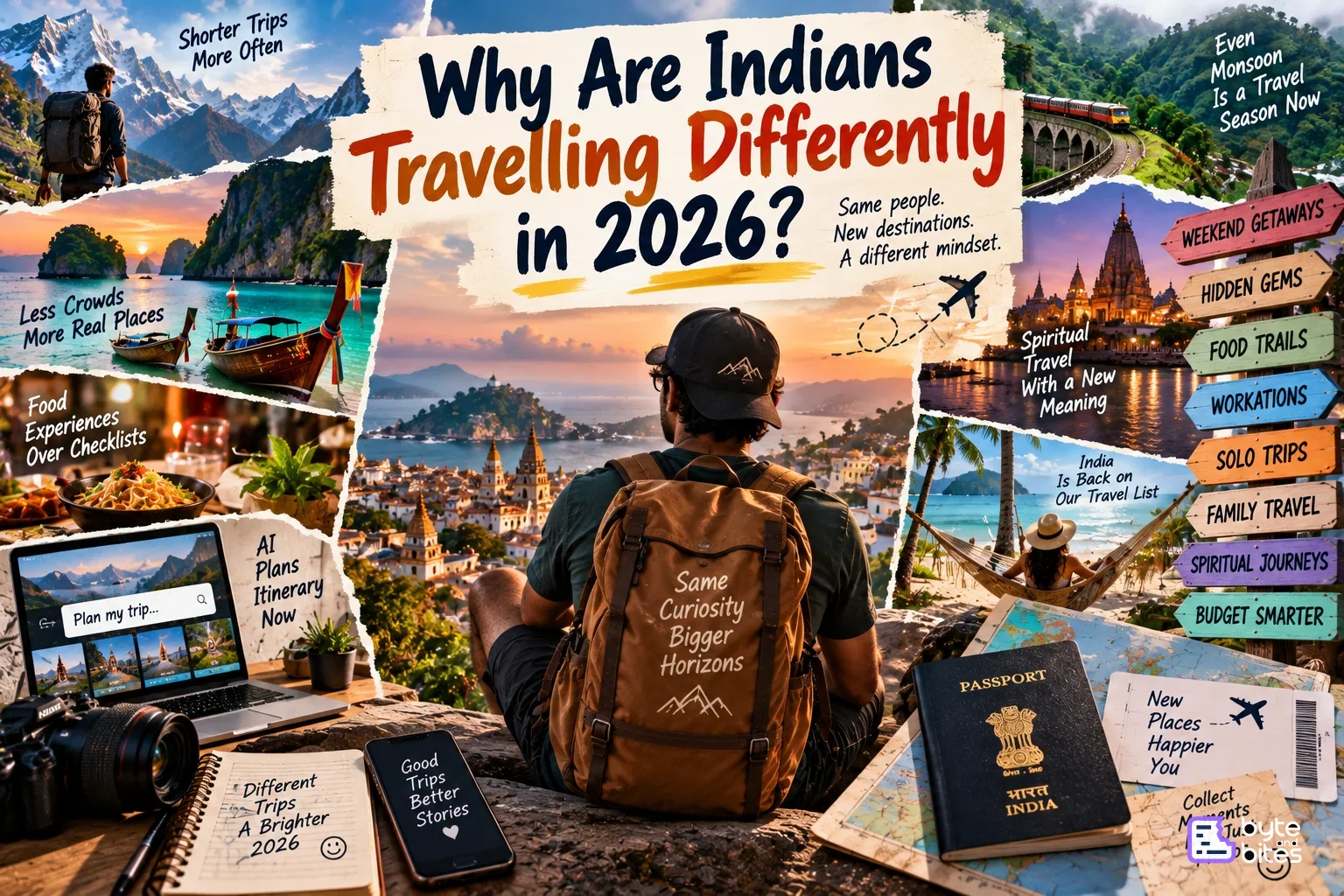
Indians are travelling more often, planning differently and caring less about simply ticking places off a list.
And honestly, I'm here for it.
The One Big Holiday Is Losing Its Crown
One of the biggest changes is simple:
People want more trips, not necessarily bigger trips.
Airbnb's 2026 research found that 7 in 10 Indian Gen Z travellers would rather take three short trips than one long annual holiday. Searches are also increasingly centred around weekend breaks and trips lasting three to five days.
That makes sense.
You don't need to wait eleven months for a two-week vacation anymore.
A Friday night flight.
A Saturday and Sunday somewhere beautiful.
Back home Monday morning.
Technically, you went on holiday.
Your Monday meeting doesn't need to know how short it was.

We're Travelling for a Reason Now
The destination used to come first.
“I want to go to Goa.”
“I want to visit Europe.”
“I want to see Kashmir.”
Now the question is increasingly:
- What do I actually want from this trip?
- Want to escape burnout? Take a quiet mountain trip.
- Want good food? Build a trip around a city or cuisine.
- Want adventure? Find somewhere with trekking, diving or kayaking.
- Want spirituality? Pick a temple town and actually explore the culture around it.
This is sometimes being called the “why-cation” — travelling because of a particular mood, interest or purpose rather than simply because a destination is famous.
And I think that's a much better way to travel.
The Instagram Famous Place Isn't Always the Goal
There was a time when getting the perfect photograph in front of the famous landmark was basically the assignment.
Now travellers are increasingly looking for the road next to it.
The small café.The local market.The village 20 kilometres away.The hiking trail that doesn't have a giant queue.
Airbnb's Gen Z research found that 95% want their trips to feel personal and unique rather than typical or pre-planned, while 90% said they actively seek undiscovered destinations.
And this isn't limited to Gen Z.
Broader Indian travel data shows growing interest in lesser-known destinations because they offer unique culture, lower costs and fewer crowds.
The funny part?
Everyone now wants a “hidden gem.”
Which means the hidden gem has 14,000 Google reviews and a parking lot.
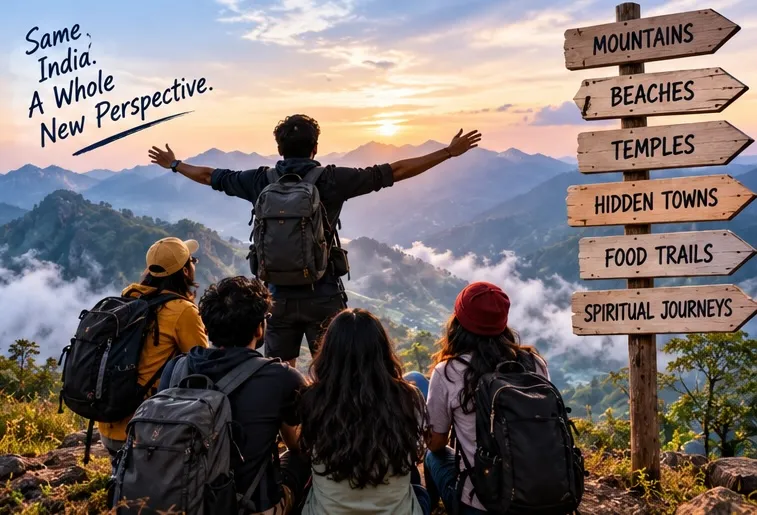
People Are Discovering That India Is Huge
International travel is still booming, but there's also a renewed interest in travelling within India.
Agoda's 2026 outlook found that 35% of Indian travellers planned to explore more within India than internationally, up from 25% the previous year. Another 51% planned to balance domestic and international travel.
And the destinations getting attention aren't always the obvious ones.
Pachmarhi.
Kaas.
Malarikkal.
Gandikota.
Karwar.
The Northeast.
Small towns.
Temple cities.
Wildlife destinations.
Places that previously required someone to say, “My cousin went there once,” are now one good Reel away from becoming the next weekend hotspot.
Even Monsoon Is Now a Travel Season
This one is particularly interesting.
For decades, monsoon basically meant:
Don't travel. Roads bad. Hotels empty. Stay home.
Now travellers are actively looking for rain.
Airbnb reported that Indian domestic monsoon searches rose by almost 40% year-on-year, with growing interest in three-to-five-day trips. Coorg, Kochi, Udaipur, Varkala, Jaipur and Goa were among the most searched destinations in its data.
Why?
Because people have realised that some places are actually better during the season everyone else avoids.
Waterfalls are fuller.
Mountains are greener.
Hotels can be cheaper.
And you don't have to fight December crowds.
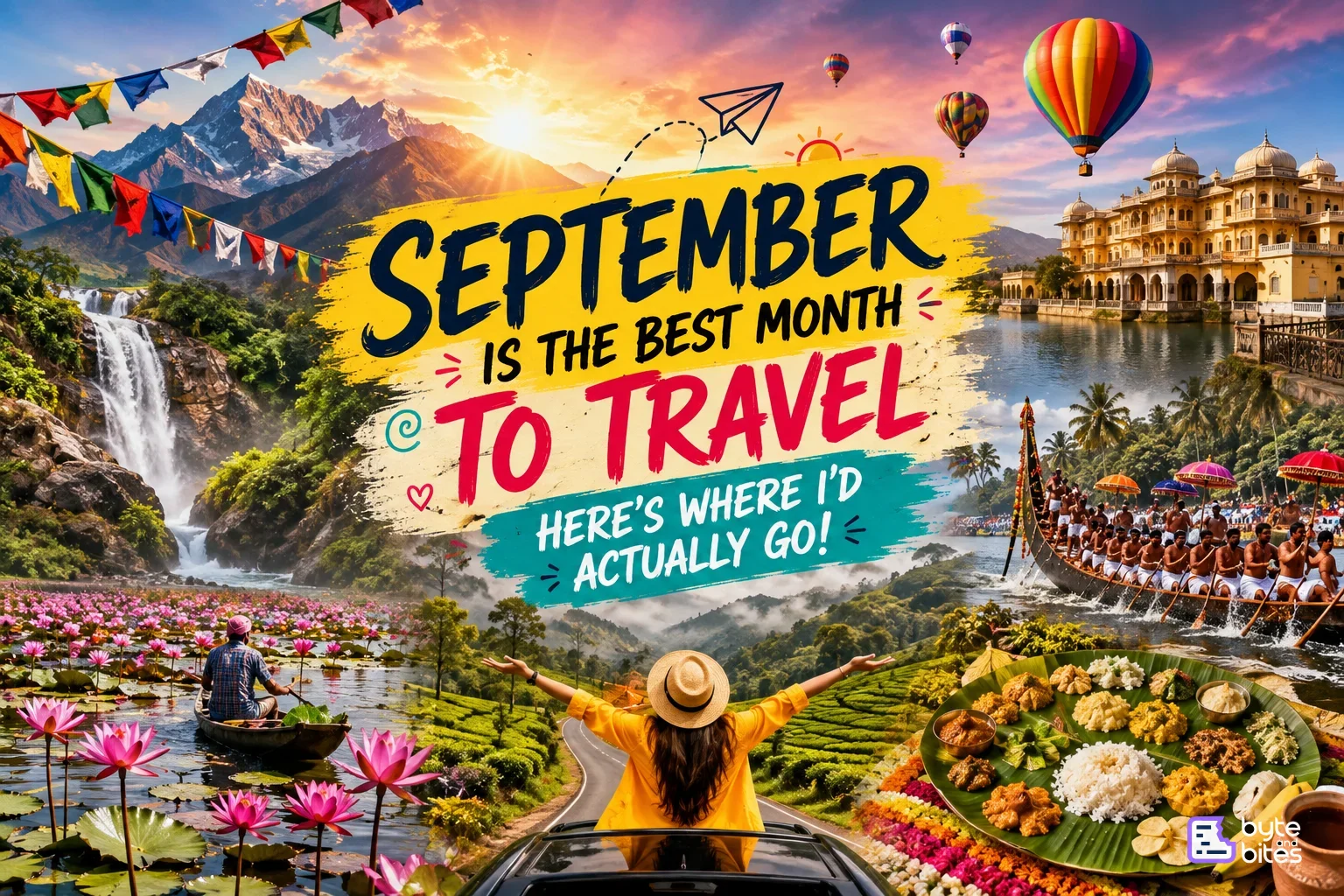
September travel, which we just talked about, is a perfect example:
https://byteandbites.com/blog/september-is-the-best-month-to-travel-in-india-heres-where-id-actually-go-67029
Spiritual Travel Doesn't Mean “Temple and Back” Anymore
India's spiritual travel boom is changing too.
A pilgrimage used to be relatively straightforward:
Go to the temple.
Have darshan.
Come home.
Now people are combining spirituality with food, history, architecture, wellness, nature and local experiences.
https://byteandbites.com/blog/want-to-travel-but-your-parents-wont-let-you-go-alone-try-these-12-places-52533
KPMG describes this as a shift from traditional pilgrimage towards a broader, experience-led spiritual tourism ecosystem.
That's why destinations such as Ujjain, Varanasi, Ayodhya and Puri increasingly work as complete travel experiences rather than just religious stops.
You can go for the temple and stay for the city.
And eat very well while you're there.
AI Has Become the New Travel Friend
This might be the biggest difference of all.
Earlier, planning a trip meant:
Google.
TripAdvisor.
YouTube.
Three WhatsApp groups.
And one uncle who had “visited Thailand in 2014.”
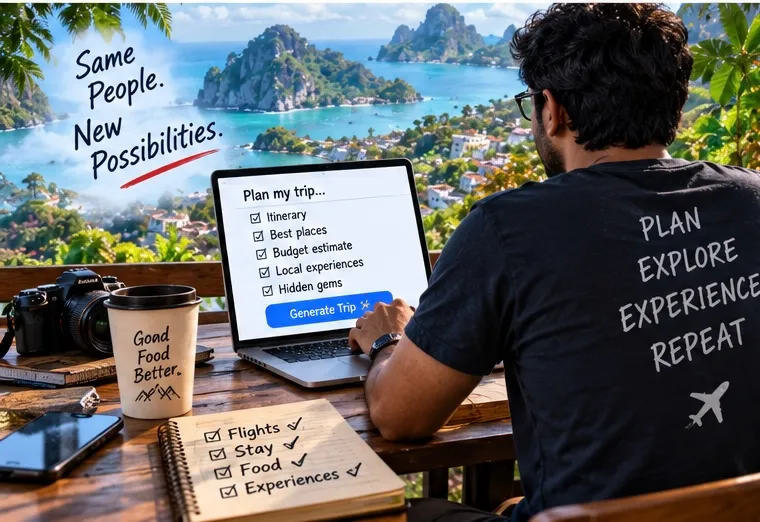
Now people are asking AI to build itineraries, compare destinations, estimate budgets, translate languages and find less touristy places.
A 2026 Allianz Partners survey reported that 82% of Indian travellers had already used or planned to use AI to organise their holidays. Agoda's research also found strong interest in AI-assisted trip planning. And travel discovery itself has become extremely visual.
Google reports that 68% of surveyed Indian travellers use YouTube for travel inspiration, while 41% say they rely heavily on influencers when planning trips.
Basically, your next holiday might begin with:
“Hey, what's that place in this Reel?”
We're Also Getting Better at Saying “That's Too Expensive”
Indian travellers aren't necessarily travelling cheaply. They're becoming smarter about where they spend.
Agoda found that 47% of Indian travellers planned to spend ₹5,000 or less per night on accommodation, suggesting a strong value-conscious approach.
People will happily spend money on something they care about.
A great food experience.
A diving trip.
A concert.
A safari.
A beautiful homestay.
But they don't necessarily want to pay ₹12,000 for a hotel room just because the lobby has a chandelier.
That's a pretty healthy change.
And Travel Is Becoming More Personal
Maybe this is the biggest shift.
The old question was:
“Where did you go?”
The new question is:
- What did you do there?
- Did you eat something amazing?
- Did you hike somewhere nobody in your group had heard of?
- Did you spend three days doing absolutely nothing?
- Did you attend a concert?
- Did you take your parent somewhere they'd never been?
- Did you finally travel alone?
- Did you find a tiny café and return every morning?
- Those are the stories people remember.
So, Are Indians Travelling Differently in 2026?
Absolutely.And even turning things like the monsoon and pilgrimage into reasons to travel rather than reasons to stay home.
- We're taking shorter trips.
- Looking for lesser-known places.
- Travelling for specific experiences.
- Using AI to plan.
- Paying more attention to value and safety.
- Rediscovering domestic destinations.
And perhaps the best part is that travel is becoming less about proving that you've been somewhere
You don't have to visit five countries in ten days.
You don't need a suitcase full of luxury shopping.
You don't even need the perfect itinerary.
Maybe you just need a free weekend, a little curiosity and a place you've never been.
Because in 2026, the best trip might not be the biggest one.
It might simply be the one that feels like yours.